Avallain and the environment – What connects e-learning with a forest in Spain?

An old saying claims a healthy mind needs a healthy body. But, in turn, a healthy mind and a healthy body both need a healthy environment to develop in. Thus, protecting our environment has been a central part of Avallain’s DNA ever since the company was founded in 2002. We offer our customers carbon-neutral e-learning solutions which not only train minds but also minimise the CO2 emissions of entire learning courses as well.

In addition to providing sustainable education for people in need via the charitable Avallain Foundation, established in 2016, we will also commit ourselves more actively to projects focused entirely on environmental protection in the future. For example, we are currently helping specialists of the People for Cause foundation with their ReTree Initiative, planting a new forest area in the barren steppes of Spain.

Avallain supports the Spanish forests

The project in Spain ties into an almost 10-year-old Avallain tradition. In 2008, we helped the NGO Trees for the Future to plant 25’000 trees in Keroka, Kenya, celebrating the 250’000th learner that was educated using e-learning systems developed with our technology (today, they number in the millions).

In celebration of our 15-year anniversary, we want to set another example. Reforestation projects are vital in this part of southern Europe. While the ancient Greek geographer Strabon once wrote that a squirrel could “hop through the trees from the Pyrenees to Gibraltar without touching the ground”, deforestation has turned much of the country into steppes largely dominated by soil degradation. The Iberian Peninsula of today is suffering from frequent droughts and forest fires. In many areas, the ground is no longer protected against erosion by strong roots, and the once-fertile soil is gradually turning to dust or karst. For us humans, this means a steady decrease in agricultural usability – for Strabon’s squirrel and the Spanish wildlife, it might mean extinction.

With this new Avallain initiative, we are working to counteract this process. Of course, we also realise that small individual forested areas are not a viable long-term solution to the problem. Thus, we are planning to extend our efforts to other countries very soon as well.

Our success in this task is also the success of our customers, whose trust in our work allows us to engage in such projects in the first place.

Avallain works sustainably every step of the way

Our customers appreciate our innovative spirit, our reliability and our experience – as manifested both in our products Avallain Author and Avallain Unity, as well as in the e-learning systems created with them. Such systems are fully sustainable, protecting the environment at all stages, from the initial design process to maintenance and most importantly, the active use by learners.

Digital education is more environmentally friendly by its very nature

It may sound counter-intuitive, but e-learning constitutes a more environmentally sustainable alternative to analogue learning models such as brick and mortar learning groups. Though the digital infrastructure needed for e-learning tools does require energy – as well as digital devices which need to be produced and will be turned to waste eventually – neither the energy usage nor the CO2 emissions generated by e-learning approaches are even close to those of analogue learning methods.

According to a 2008 Open University study which focused on 13 fixed-location university courses and 7 online courses, e-learning courses require 87 % less energy than analogue courses, while emitting 85 % less CO2. The tangible benefits of e-learning are known throughout the industry:

  • It eliminates carbon emissions created by each learner’s commute.
  • It does not require heated and powered course premises or individual workstations.
  • It minimises the use of printer cartridges and paper.
  • It eliminates the need for non-recyclable utensils such as marker pens.

Thus, our customers can minimise the environmental impact of each learner enrolled in a course. Eliminating the CO2 emissions from commuting alone is enough to make many e-learning courses almost entirely carbon-neutral.

Sustainability in Avallain’s operating procedures

Of course, these principles work not only to minimise the CO2 emissions of individual learners – but they can also be applied to the working environment. As a staunch advocate of Remote Company structures, Avallain has been following this strategy for years, offering a large degree of home office flexibility to our workforce. Thus, we can avoid long daily commutes, minimising our CO2 footprint in the process. A Carbon Trust analysis suggests that, given average commuting distances, this saves approximately 260 kg of CO2 equivalent per worker each year.

Green business experts note that these carbon savings already apply to commuters travelling more than 7 km by car, 11 km by bus or 25 km by train. To an international company like us, this only serves to support our approach. Being a Remote Company allows us to offer our customers software solutions developed by a tight network of international specialists – without incurring the costs in CO2 which this might otherwise entail.

Limiting CO2 emissions with sophisticated technology

Not just our operating procedures are chosen on the basis of environmental questions – our technologies are, as well. Server systems, in particular, can have an enormous impact on the environment.

We recognised the potential of Cloud-based server structures early on, consequently taking on the responsibility to push for sustainable server use strategies with professional Cloud server providers. Today, providers such as Amazon Web Services are continually improving their technological solutions to operate their Cloud-servers as energy-efficient and as close to carbon-neutral as possible, devising strategies such as:

  • Using renewable energy as a power source
  • Employing energy-efficient cooling systems
  • Optimising energy usage according to workload

Put together, such strategies allow Cloud systems to significantly reduce the number of servers used when compared to on-site servers. This also minimises the energy usage of Cloud systems by as much as 84 % compared to on-site servers. Thanks to our good business connections to Amazon, we are able to use CO2-neutral Cloud systems for 80 % of all Avallain services thus far – without increasing the price for our customers, as we compensate the additional costs.

The education of the future is carbon-neutral

What does all of this mean to the users of learning software based on Avallain Author and Avallain Unity? It means that they can not only improve their individual learning success thanks to innovative, technologically mature and reliable software – they can also do so while supporting a sustainable and future-proof approach to treating the environment.

Because this is what ultimately connects Avallain solutions with our Spanish forest: They both provide the roots on which future generations may tread.


Reliable voice technology, at last – Avallain supports individualised learning approaches

What could be the perfect user interface for interactions between humans and machines? The IT industry has been pondering this question ever since the advent of advanced computer systems. When it comes to digital language learning, however, the answer is obvious – The ability to input language verbally offers unique possibilities for learners, something that keyboard-driven written input simply cannot match. Unfortunately, early attempts at tapping the potential of this input method tended to fail because of the rather underdeveloped technology that was available at the time.

How, then, does Avallain use Avallain Author and Avallain Unity voice technology to individualise and improve learning experiences and results as decisively as we do today?

How voice technology supports the learning process

Traditional user interfaces based on visual feedback, such as keyboards and touch screens, have one noteworthy disadvantage when used for learning a language – Users can only enter their words into the e-learning software via a keyboard. Consequently, they are able to train their reading, listening and writing skills in their language of choice, but they cannot effectively train their speaking skills. This is where integrating voice technology into the language learning process opens up a whole new set of possibilities:

  • Users can actively train their speaking skills.
  • Learners can receive immediate individualised feedback.
  • Errors in pronunciation can be detected before they fossilise.
  • Language teaching approaches no longer need to be based solely on written language.

Avallain has recognised the advantages that voice technology can offer early on. We have been following the developments in this field for many years, keeping an eye out for voice technology advancements which can be integrated into our products to improve them in a meaningful way. However, we do not blindly follow any new approach, as underdeveloped technology could impact both the user experience as well as the ultimate goal of learning a new language very negatively.

The three milestones on the road to a mature voice technology

Only 15 years ago, no one would have believed that voice technology – which, back then, was rather limited and frequently unreliable – would mature into advanced voice recognition software such as Siri and Alexa. Today, people all over the world can control these virtual assistants by speech, using countless different languages and dialects. And when these assistants are asked questions, their ability to give fitting answers has become remarkably reliable.

Today, voice technology is advanced enough to meet our standards of quality, which means it can offer significant benefits to users of Avallain Author and Avallain Unity. Our products allow educators to create and publish interlocking e-learning solutions which would have been considered science fiction, even in the nineties. In addition, research suggests that real breakthroughs in some of the most complex areas of voice technology have been made over the last couple of years as well.The path to the current state of the art has been very demanding, requiring us to overcome three key milestones.

First milestone: Audio recording and playback

From today’s point of view, recording and playing back speech over the internet could be considered the easiest of the three milestones to be overcome. This technology constitutes the basis of all further developments in the field. And since it already managed to meet our standards of quality in 2002, we could successfully integrate it into our Macmillan English Campus project even back then.

Today, our software supports a variety of recording and playback methods and applications. For example, Avallain Author allows user input and pre-recorded files to be merged into complete dialogue sequences, both online and offline. Thanks to Avallain Unity, the final recordings can then be sent directly to teachers for feedback, or simply as a means of verbally communicating outside of the fixed course locations.

Second milestone: Synthesised language

Compared to recording and playing back speech, creating synthetic voices audio is a much more complicated topic. For this reason, we waited until the technology had sufficiently matured in 2004 before integrating speech synthesis as a feature into our e-learning software. Back then, we entered into several partnerships with leading speech synthesis companies such as Acapela Group. These cooperations allowed us to offer exciting new features to our customers, all based on language synthesis technology. Some of these features include:

  • The ability to translate pre-written text into synthetic audio (text-to-speech).
  • Adjusting specific features of recorded speech – e.g. changing dialects to fit specific markets.
  • Controlled and scalable production of audio recordings.
  • Learners can directly translate their own written input into audio using text-to-speech (TTS).

Our current voice technology is flexible enough to create and play back authentic speech using various languages and dialects. Even UNESCO has noted how useful this feature has been for literacy programmes all over the world, describing our successful efforts to provide Swahili education to the coastal population of Kenya on page 16 of their report on international education initiatives.

Third milestone: Speech recognition

Until recently, speech recognition and assessment has always required the attention of an educator, particularly because of the great variety of possible pronunciations. And even the specialised software solutions of today, which can be valuable to automated pronunciation analysis, still only apply to very specific cases of language analysis.

Because of these limitations, our focus has been on general voice recognition features, meaning the ability of the software to recognise and accurately transcribe spoken language. In the early days, even technology developed by giants such as Microsoft, Apple and Google could fail, regardless of the quality of speech. The first companies to offer significant advances in this area were niche software providers such as Nuance who would often go on to be market leaders in areas such as recording dictations and automating customer services. However, their solutions usually required users to be trained in using their specific software.

For us, this approach to voice recognition was not an ideal solution for the education sector, as the need to teach learners how to use a learning software only creates additional obstacles on the way to education success. For this reason, we initially concentrated on using less technologically ambitious, more intuitive e-learning solutions. For example, when working on the learning platform iwdl.de, we deliberately limited voice input options in gamified exercises to individual words instead of entire sentences. Using this approach, iwdl.de has managed to become the first ever digital learning tool to be approved by the German Federal Office for Migration and Refugees for use in immigrant integration courses.

2017 – Visions of the future become a reality

Now that we have successfully overcome these milestones, voice technology opens up a whole new world of exciting possibilities to learners and educators alike. In the summer of 2017, for the first time, we will introduce an Activity Type which allows the software to give direct feedback to learners regarding the quality of their pronunciation of texts within an Activity. After that, the next important step is to introduce the ability to use spoken language within any given Input Activity. This could be used for exercises in which learners have to enter elements verbally or even for gamified exercises in which learners can simply utter the answers to specific questions – these are the near-future milestones for Avallain.

To achieve these goals in 2017, we are currently working primarily with Google’s Speech API, however we will be using three of the key software solutions in this area in the near future.

What’s next for Avallain? That will be decided through constant communication between us and our customers. But one thing is certain – as always, our customers will be the first to be able to offer the latest technologies to their end-users in a comprehensive and fully reliable form. Together, we will make individual education more comprehensive, more efficient and more exciting.

German federal immigration agency approves the first digital learning tool for use in integration courses

The German Federal Office for Migration and Refugees (BAMF) has officially approved the German Adult Education Association’s (DVV) free adult education platform Ich-will-Deutsch-lernen.de (iwdl.de) for use in immigrant integration courses. It is the first ever digital learning tool to be officially approved by the agency. The platform, which has been created using Avallain Author and the Avallain platform architecture, can now be used as a blended learning tool for the courses.

Flexible learning paths for German as a second language

The educational platform iwdl.de transposes the German integration course curriculum into a digital learning environment. To support the integration of immigrants into German society both in terms of language and culture, iwdl.de offers more than 11’500 exercises in various areas of learning:

  • 4’500 different language exercises which guide learners from proficiency level A1 (beginner) to B1 (intermediate language use).
  • A learning area focusing on German as a second language literacy skills, expanding the level A1 language course with exercises that focus on acquiring written language skills.
  • 30 comprehensive scenarios for occupational language learning, encompassing exercises that increase occupational language skills up to level B2 (upper intermediate).

Whenever possible, the Avallain Author created learning content is combined with multimedia elements such as videos or audio exercises. To navigate the content, learners can use an interactive board game-like learning map illustrating their learning path.

The structure of iwdl.de is based on the Avallain platform architecture, which allows learners to choose exercises based on their own interests as well as their learning progress. Meanwhile, their DVV tutors can supervise everything digitally, giving individual feedback and help when needed. This allows the tool to be used both to provide a foundation for individualised learning within heterogeneous groups and to support independent learning efforts.

After one-and-a-half years of use and great success by four German adult education centres, BAMF has officially approved iwdl.de starting 1st of May 2017. This makes it the first ever digital learning tool to be officially approved by BAMF as a fundamental learning tool for immigrant integration courses.

With reference to:
https://www.dvv-vhs.de/presse/details/news/detail/News/erstes-digitales-lehrwerk-fuer-integrationskurse-zugelassen.html
https://portal-deutsch.de/unterrichten/deutsch-unterrichten/ich-will-deutsch-lernen/

Walking a fine line – Big data as an opportunity for educational technology

Even in our tech-savvy modern world, the term “big data” can divide opinions. To some, the term is synonymous with surveillance, to others it represents the unique opportunity to analyse and gain a thorough understanding of complex situations by means of technology. Within the educational sector in particular, big data can significantly improve the effectiveness of differentiated and individualised learning processes.

But how is it possible to observe the various ethical and legal restrictions of the international marketplace at the same time?

Information overload in the digital age

Detached from its moral and political connotations, the term “big data” simply describes sets of data which can only be processed by technological means. In most cases, the information is in a state of constant flux or it is too unstructured to be successfully processed by the human brain. Often, the datasets are also simply too large.

Only a few decades ago, this would have been an insurmountable problem, leading to the loss of valuable information. But today, even particularly large and complex datasets can be collected and processed thanks to advanced digital systems. Now more than ever, software is being used to perform tasks that are simply too difficult for humans to perform at the same level. Notably, such tasks include:

  • Collecting vast datasets
  • Analysing and correlating individual pieces of information
  • Interpreting all available information

Processing information this way saves both time and resources – while yielding surprisingly precise results. One need only look at the institutions that already rely on such systems to realise just how useful big data processing can be.

The economic and social role of big data

Advertising companies were among the first to use computers to collect, analyse and process big data. This entails automatically correlating highly complex subjects such as personal thematic preferences as well as patterns of media consumption and purchasing behaviour. The resulting insights are then used to create advertising strategies designed to psychologically affect a target audience by catering to its specific communicative needs.

Today, even taxi companies rely on collecting and processing big data to optimise their workflow. And since the US election in late 2016, it has become obvious that big data is not only processed by big business, but by political and social entities as well. Big data has become an integral part of modern society, and it is a subject of much discussion in the educational sector as well.

Can the EdTech Industry take advantage of abundant information while avoiding the risks involved?

There are two major discussion points: complexity and the legality. Big data processing solutions are highly complex by nature, which is why there are ethical as well as legal considerations to be made. For example, many countries do not allow for large individual sets of learner data to be merged with each other for analysis, on grounds of privacy protection.

Of course, there are good reasons for extensive privacy protection legislature. For example, the ethical concerns over the complete surveillance of classrooms practised by some US start-ups are completely reasonable. However, prohibiting big data processing techniques such as merging learner data across municipal borders can cause the artificial intelligence behind the system to form conclusions based on insufficient information. Consequently, any resulting analysis of such a limited dataset would be distorted, negatively impacting the individual learning experience.

The Avallain solution – One comprehensive system, fully customisable

We at Avallain have been tackling the topic of “big data” for a very long time. How can the available big data be collected to improve individual learning experiences – while simultaneously observing ethical and legal restrictions, which may differ from country to country?

Does big data provide big advantages to e-learning?

One of the unique benefits of education technology is its ability to adjust to the needs and preferences of individual learners in order to support individualised and differentiated learning approaches even within heterogeneous groups. However, when developing our own system, we found that most contemporary tools are solely focused on collecting trivial information, such as counting click-through-rates via Google Analytics, collecting administrative statistics as well as individual test results and tracking the frequency in which learners use particular pieces of content. Using such tools, one may be able to calculate average scores, but it is impossible to easily determine which educational approach has most significantly supported a learner in their studies. Finding such information usually requires a lot of additional work on the part of educators.

Even simple tasks like merging large datasets across platforms and devices using xAPI has not yet become an established standard for these tools. Such a limited and unstructured approach to big data does not yield useful information; it only contributes to “data lakes“. This means that the software collects input and simply stores it without analysing or collating it. Because of limited resources, such information tends to only accumulate over time without ever being processed.

The Avallain system – Think big

Our software solution, first released in 2016, is the result of our observations. It was designed to process big data efficiently without crossing ethical boundaries. Our system is based on the very same philosophy that Avallain has been following for more than 10 years now. Combining the most advanced technologies with the maximum amount of user friendliness thanks to complete flexibility. Our system cannot only be adapted to the personal needs of individual users, but also to the ethical and legal restraints of any given country.

Our system combines an xAPI learning record store with additional event storage capabilities. Not only does this allow learner progress to be recorded, but it also allows any given event to be recorded, ranging from menu usage to voice recordings in interactive audio tasks. Such events are stored in a separate big data warehouse system and can be processed using any common business intelligence suite. We also focus on usability when retrieving information – the process is particularly quick and does not require any additional training. This allows for effective big data mining from the very first day of using our software, giving immediate answers to questions such as:

  • Which content is especially popular?
  • Which content is popular with which age group?
  • Which content may be too hard or too easy?
  • Which content yields the best learning results?
  • Which channels of communication are being used within the learning platform?

Both the event storage system as well as the business intelligence suite can be completely customised according to the customer’s requirements. Our big data analysis system is compatible with database systems ranging from open source software to professional cloud storage solutions. In addition, it can operate with any of the most common analysis tools such as Amazon Elastic Map Reduce. Thanks to the cross-industry approach of our architecture and the established standards which it is based on, we can quickly adjust to future developments and new methods of big data analysis as well. These can be integrated into the software at any time, while remaining cost-efficient.

Responsible use of big data supports individual paths to learning success

Avallain provides systems for efficiently using big data in digital education – which is done without crossing any ethical or legal boundaries. Our intelligent systems offer educators, institutions and corporations the ability to collect, analyse and interpret information in a very cost-effective manner.

We have recognised that by using big data consistently and responsibly, we can revolutionise individualised and differentiated learning approaches. To learners, this paints a particularly bright future, as their education will be more individualised, more interesting and more effective thanks to big data.

Hueber trusts in Avallain – Learning languages in the digital age

When the market leader in educational material for “German as a Foreign Language” / “German as a Second Language” enters into a partnership with Avallain, exciting times for language learners are guaranteed. The renowned publishing house Hueber will be using Avallain Author and Avallain Unity in the future; which means that they will build didactically and methodologically sound educational content on an innovative yet reliable technological foundation.

Almost 70 years of experience with 30 different languages

Hueber offers some of the most successful textbooks on the market, being an international pioneer in the field since 1955. Aside from their focus on German as a Foreign Language (GFL), they offer various products for learners and educators in more than 30 languages, ranging from textbooks to audiobooks as well as online courses.

Imparting comprehensive language skills

The name Hueber is synonymous with high-quality educational content, which employs the most recent didactic insights while creating a fun language learning atmosphere at the same time. However, to achieve both requires catering to learners’ abilities with customised content.

Interactive learning environments can be the answer to this challenge”, says Sylvia Tobias, chief sales and marketing director at Hueber. Avallain solutions meet her requirements completely: “Avallain Author allows us to create interactive learning content which adjusts itself to the abilities of the learner. Thus, we can support each learner individually, preventing the frustration of perceived setbacks.”

Ignatz Heinz agrees wholeheartedly, based on his own experience as co-founder of Avallain:

Over the last 15 years, we have been working with renowned publishers such as Macmillan, Oxford, Cambridge and Pearson, successfully creating various solutions for English-based language training. Most recently, we built a unique digital learning environment for Spanish language learners with Difusiòn – in a matter of months. Unarguably, we are the leading partner for publishers when it comes to interactive language learning.” Looking forward to the new partnership, Heinz says: “We are especially thrilled to now support Hueber as well – after all, they have spent more than half a century establishing themselves as the international vanguard of GFL education.

Thanks to Avallain Author, future educational content created and published by Hueber will be entirely independent from technological change. Thus, Hueber’s e-Learning expertise will endure in the face of technological progress.

VERITAS and Avallain are shaping the future of education in Austria

When it comes to formal education, the Austrian government has a clear goal for the near future – more digital learning content in schools. VERITAS, Austria’s largest and most innovative educational publisher, is set to lead the way by providing interactive textbooks as well as content which supports the entire learning process with performance-based personalized feedback. With their internationally-renowned partner Avallain, VERITAS will turn the dream of adaptive learning within heterogeneous groups into a reality. Schools across Austria stand to benefit from this unique collaboration.

Turning experience into innovation

Starting as a small publishing house, VERITAS has had some 70 years to grow and expand. Today, it is hard to find an Austrian school that does not rely on VERITAS textbooks. The publishing house has managed to achieve this status by conforming to the highest standards of quality and by always keeping up with the latest innovations in education theory and technology. It is no wonder, then, that among the large number of potential partners, they have decided to work hand in hand with Avallain to create groundbreaking digital education solutions.

A strong partnership, ready to make a difference

We are particularly impressed with the great versatility of Avallain Author and Avallain Unity”, says VERITAS Managing Director Manfred Meraner.

“Thanks to its highly modular design, we can fully adapt Avallain Unity to our specific requirements. But most importantly, it allows us to cater to the changing needs of each individual learner. At the same time, we can use Avallain Author to create educational content that is independent from any potential changes in technology, thanks to its object-oriented approach. This makes it easy to quickly react to technological innovations and to deliver high-quality educational content to schools.

VERITAS and Avallain are already working on their first big project, an extensive e-learning suite for interactive textbooks that will be able to react to local requirements quickly and with a great amount of precision. Avallain has already established its expertise by working with leading institutions such as Oxford University Press, Westermann and Pearson on similar projects. This great wealth of experience now stands to benefit VERITAS – and the Austrian educational system.

Working with VERITAS is a real opportunity for us to update the educational material available in Austrian schools for the requirements of the 21st century”, says Ignatz Heinz, Managing Director and co-founder of Avallain. “VERITAS has made a name for itself by being a great innovator in the field of education, and that is a perfect match for Avallain. Together, we can use the most advanced digital technologies to provide learners all across Austria with the exact educational content that they are looking for – the kind that is both fun and effective.

Huss Media and Directa Publishing House launch the future of vocational training with Avallain

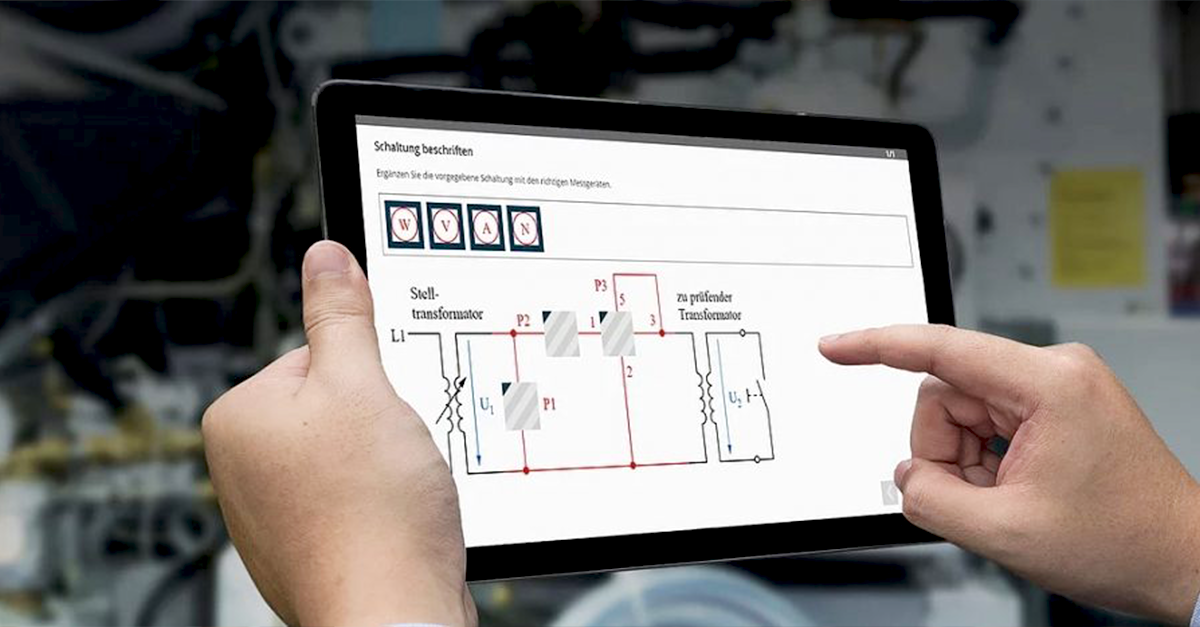
There is an abundance of specialist journals, textbooks and magazines for trade and industry, their main focus varies and the range is growing steadily. However, the interactive digital content that print publications now offer their readers is brand new: Since September 2016, deduu (digital education utility) – a learning platform with interactive learning modules for various disciplines such as electrical engineering or metal technology – is complementing the specialist magazines published by Huss Media and Directa.

This way Huss Media and Directa Publishing enhance their focus on traditional vocational print magazines and textbooks for the commercial sector, with future-oriented and innovative ways of delivering learning.

Torsten Ernst, Publishing Director of Huss Media GmbH, says:

“With the launch of our deduu project, we managed to bridge the gap between our print content and the digital world. From a publisher’s perspective, this is the missing link all publishers are searching for to enhance their traditional media products with a digital element.”

From the outset, deduu presents itself as a scalable learning platform, aimed at the needs as well as target groups of various customers. Not only does it thereby open a new market sector, but also expands the publisher’s magazine division with innovative offers, thus generating a younger audience. There are, for example, numerous products that enrich the vocational section of various magazines with interactive exercises. Vocational students can thus strengthen their knowledge or prepare for their exams.

From expert to interactive author – Avallain Author as facilitator

The platform technology is based on Moodle, which as an open source learning management system has a large community. The interactive content is developed with Avallain Author, an authoring tool that does not require any programming skills or prolonged training. Avallain Author provides an export of the produced content into the Moodle LMS. In cooperation with EDU-Werkstatt GmbH1, which is part of the d-education GmbH (a consortium of Directa, Huss Media and EDU), Avallain trained numerous authors from various disciplines to enable them to create a new range of digital products. Avallain Author turns print media specialists into authors of interactive learning materials.

Nico Warncke, publishing director of Directa Publishing, underlines the importance of this cooperation:

The advantage for specialist publishers is obvious: In addition to traditional articles in print media, we can now use the knowledge and expertise of our authors for interactive content, since Avallain Author requires minimal training and hardly any existing computer skills. Furthermore, deduu enables us to generate a more versatile publishing range that is better geared towards today’s needs. This allows us to access new markets and more importantly, win new young readers.

In addition to the monthly magazine, readers have access to the electronic learning modules via “my.deduu.de” and can therefore benefit from significant added value:

  • Readers receive feedback on their personal knowledge
  • In addition to the solution itself, the approach as well as background knowledge is explained
  • The product range is always up-to-date and grows over time
  • The user can try out different learning scenarios
  • There are tests to help with exam preparation
  • The product range is tailored to a target group that is mobile and lives and learns in a digital way
  • It can be used on all digital platforms (PC, tablets, smartphones)
  • Learning on the go using mobile devices is also supported

The move of specialist publishers towards digital education content

Going forward, the publishing range of deduu will be constantly expanded with new disciplines and areas of learning. This year will still see the launch of new products that help students prepare for exams.

Ignatz Heinz, Managing Director of Avallain, is pleased about the successful cooperation:

To make a contribution to vocational training programs and to accompany specialist publishers on their way to a digital education, is a great step towards new learning opportunities and pioneering vocational training developments. We look forward to see what customized interactive content will be built with Avallain Author next.

In January 2017, the new continuing learning opportunity “Modern metal technology” will be launched. It is aimed at vocational students and working professionals in all metalworking vocations and designed to help them prepare for their exams. This takes Avallain’s contribution in optimizing professional education materials and reaching a wider and younger audience one step further.

1 The EDU-Werkstatt GmbH is a young company that was established in 2012 and specializes in digital educational media; www.edu-werkstatt.de

Diversity through unity: digital education, delivered by Avallain Unity

Learning has never been more diverse. The digital revolution has forged new media, new content types, new ways to organise and monitor learning. It has given rise to new learning methodologies such as differentiated and personalised learning. It has freed us to learn and teach on a range of new devices, and thereby shift the boundaries of the classroom in new and exciting ways.

This diversity offers an unprecedented opportunity to meet the specific needs of learners and teachers. But it is also a very real challenge for those delivering education. Diversity breeds complexity, and that complexity can be hard to control. That is why we have spent the past two decades developing Avallain Unity.

Avallain Unity is true to its name. It creates diversity out of unity. It delivers powerful, flexible learning for all contexts, based not on a single technology, but on a union of the best technologies in digital education, working in a single, coherent ecosystem.

So where did it come from, and how does it work?

The vision for digital education: tools to collaborate and manage learning

In 1997 we developed our first Learning Content Management System (LCMS), long before the term became widely recognized. This enabled our clients to create and manage large numbers of learning objects, and gather them into collections as lessons or courses. But this was a starting point and not an end. Publishers, institutions and teachers needed flexible tools to publish and manage multiple lessons and courses, in a user-friendly environment, and then track and support the activity of learners. To achieve this in a way that was meaningful, we needed to study learning paradigms, and the interplay between the stakeholders in education, and then provide effective tools to move them online.

Of course we were not alone in our ambitions. At around the same time, other providers emerged from higher education with technology based on ERP (Enterprise Resource Management). But ERP was conceived to collect, manage and interpret data, not as a basis for learning, and so often interfaces were dry and functional, structures rigid, and the user experience complex. The open source movement also produced powerful platforms, which made learning management technology more widely accessible, and quicker to evolve. But these are hard to customise without losing central support – one of the principal advantages of any third party system.

In each of these cases, educators often faced difficulties adapting the tools to their diverse needs. All too often, the learning was forced to adapt to the technology, rather than the other way around.

Learning management, done differently

We knew we had to do something new. Our years of work with many different learning providers had taught us several things about digital education:

  1. It’s all about the learning. Technology, however bold and innovative, is only useful if it supports learning experiences and outcomes. To achieve this education focus within technology, we would have to find a new skill set, which we called education design. As early as the 1990s, we became the first to develop a dedicated role for digital education designers.
  2. It’s not the same for everyone. Learning – and particularly digital learning – is a very different prospect for different types of learners, teachers and institutions. Our solution would need to be architected to support diversity.
  3. Things change, and quickly. Any technology of this ambition would go through a great deal of evolutionary change. Underlying technologies would come and go, and our architecture would need to be robust and flexible to allow that to happen.

Best-of-breed technologies, blended

With these as our founding principles, we set about developing Avallain Unity. We adopted a modular, object-oriented architecture, which would give us the flexibility to adapt to customer needs and technological change without difficulty. We separated presentation, features and content, so that we could innovate in one area without reinventing the others. Then we began drawing together best-of-breed technologies that we judged to offer learners, teachers, institutions and publishers the very best educational possibilities. In this way, we offer our clients early, low-risk access to technologies that have since become fundamental to the industry, such as:

  • WCMS (Web Content Management Systems): tools that allow teachers, institutions and publishers to control how their platform is presented, without the need of programmers or additional marketing systems.
  • Gamified accessways: interfaces that use the engaging, motivating features of gaming to facilitate and encourage learning.
  • Cloud-native architecture: Avallain Unity was designed from the outset with a cloud computing architecture that simplifies delivery and enables mobile learning.
  • Ruby on Rails: the elegant and solid framework for responsiveness and flexibility. As early adopters, we were able to lead while the majority of EdTech startups followed.
  • xAPI: a specification for a common language to capture the actions and achievements of learners, wherever they are learning, on whatever device.
  • LTI (Learning Tools Interoperability): a set of specifications that allow our technology to communicate or integrate with third party tools or educational platforms.
  • eCommerce: the facility to manage financial transactions, including facilities for flexible pricing, upgrades and in-app purchasing.

All the while, we have kept that all-important focus on learning by ensuring that our education designers and our clients lead each new phase of development. This means we capture what works, while avoiding some of the technology fixations we see elsewhere in the industry. If it doesn’t work for students, teachers and institutions, it doesn’t make it into Avallain Unity.

But the innovation continues. One technology we are working with now, for instance, is a solution to manage and interpret the vast quantities of complex user data generated by our learning platforms and content. We are deploying business intelligence and data warehousing technologies like Amazon Elastic MapReduce and MetaBase BI to analyze this data more quickly, and to deliver ever more powerful insights. These insights will help students to learn and teachers to teach through personalized and differentiated learning, but they will also help Avallain and our clients, because they will inform the developments of the future.

30 platforms, 150 countries, 15 million learners

Avallain Unity’s flexible approach to technology has enabled us to deliver more than 30 groundbreaking learning platforms to more than 15 million students, in radically different educational contexts all over the world. Some of the many learning programmes delivered by Avallain Unity are:

  • Adult literacy programmes in Africa and Europe
  • Language teaching with Pearson, Oxford University Press, Cambridge University Press, Cornelsen, Difusion and Macmillan
  • Primary and secondary curriculum education in places as contrasting as Germany and Mexico, Kenya and the UK
  • Integration education to support more than a million recent immigrants to Germany

But however many the applications of Avallain Unity, the platform remains true to its founding vision: a union of technologies that truly work for education, delivered flexibly to support a diverse and changing learning landscape.

Diversity through unity. After nearly twenty years, we know it is a vision that works, and we’re excited about where it will take us next.

Gamification with Avallain: points are really not the point

The concept of gamification may have been around since as early as the 6th century BCE – when military leaders in ancient China practised strategy with the game Go1 – but the term gamification itself wasn’t coined until 2003. Since that time, it has most often been used to refer to the process of applying game-based thinking and techniques to otherwise non-game situations, particularly in the fields of technology and edtech. Some consider applied gaming and gameful design to be synonyms of gamification.

The gamification process often results in serious games, which are not called serious because they lack fun. On the contrary, many serious games are great fun, but fun and entertainment are not their primary purpose. Instead, serious games aim to precipitate changes in learners in anything from skills and knowledge to health and wellbeing.2 In serious games, game techniques are applied to content to engage learners, and intrinsic motivation is elicited to spur sustained change.

What drives intrinsic motivation? Not points.

Intrinsic motivation is driven by “autonomy, mastery and purpose” (Pink, 2011): learners want to self-direct their learning; improve their knowledge and skills; and learn about and do meaningful things.3 Well-designed serious games allow learners to do all of those things, all without fear of failure or embarrassment. They also help avoid or decrease many of the time, cost, safety and organisational constraints often involved with learning and training.

There is some belief that simply adding a system of points or rewards to a product will gamify it, but we believe this is a trivialisation of gamification. Some experts refer to this process as “pointification” and don’t consider it gamification at all. Additionally, some research shows that incorporating only extrinsic motivators such as points can actually detract from learning and motivation.3 In order to develop intrinsically valuable gamified products, content must be gamified by mindfully incorporating game elements such as characters, stories, challenges and levels to predetermined learning objectives.4

Intrinsically motivating and award-winning: gamification at Avallain

Avallain Author and Avallain Unity give our clients the opportunity to gamify content by incorporating these and other game elements into their products. Pearson, for example, used Avallain Author to create rich interactive digital content including quests, games and songs for the language-learning adventure game, Poptropica English. Richmond, another of our clients, used Author to create Spiral, a virtual learning environment packed with interactive activities, games, cartoons and animated stories. And Oxford University Press has been using Avallain Author and Avallain Unity to create and support Oxford Owl, an award-winning learning management system that offers gamified educational content for both students and parents. All three of these serious game projects incorporate intrinsic motivators and engage learners with fun game-based activities.

We also collaborated with Deutscher Volkshochschulverband, the German Adult Education Association, to produce ich-will-lernen.de, a story-based, levelled game that teaches basic skills in German, English and maths. The content was gamified into a digital board game with levels that the learner must work through in order to help a character solve challenges. The addition of game elements to the educational content has proved highly successful in engaging learners, and the project has won multiple awards.

Putting game elements to work; playing to learn on the job

Gamifying since before the term gamification was coined, we’ve had experience adding game elements not just to educational content, but to hands-on job training content, as well. For instance, with Elsevier and Nestlé, we created scenario games, also known as story-based games, for teaching and training employees. For Elsevier, we created a scenario game that trains learners to administer ultrasound scans, and for Nestlé, we created a scenario game that allows workers to virtually tour and learn about factories and procedures. Both games elicit intrinsic motivation by giving employees the chance to self-direct, learn at their own pace, practise without fear and succeed in a virtual version of their workplace before having to actually perform tasks on the job. Additionally, game elements such as characters, stories and quizzes engage the learners and make the learning experience more accessible and enjoyable.

Gamification tools tailored to fit your educational design

Avallain Author and Avallain Unity support creativity and intrinsically motivated learning by offering authors much more than just a simple list of features like points, levels or time limits. With our tools, authors can add game elements to their content based on their own educational objectives instead of having to adapt their objectives to fit the tools. Our gamification technology is designed to be easy to use and customise, saving our clients time and money while still allowing their creativity to flourish. We tailor the technology to fit the concept, and not the other way round.

1 Deterding, Christoph Sebastian (2016). Make-Believe in Gameful and Playful Design. In: Digital Make-Believe. Human-Computer Interaction. Basel, Switzerland: Springer. pp 101-124http://eprints.whiterose.ac.uk/100127/1/Deterding_2016_Make_Believe_Gameful_Playful_Design.pdf

Halter, Ed. (June, 2006) From Sun Tzu to Xbox: War and Video Games. New York New York: PublicAffairs.

2 McCallum, Simon (2012). Gamification and Serious Games for Personalized Health.http://citeseerx.ist.psu.edu/viewdoc/download?doi=10.1.1.465.3239&rep=rep1&type=pdf (pg 86-87)

3 Pink, Daniel H. (2011) Drive: The Surprising Truth About What Motivates Us. Riverhead Books.

Wikipedia (2016). Drive: The Surprising Truth About What Motivates Us.https://en.wikipedia.org/wiki/Drive:_The_Surprising_Truth_About_What_Motivates_Us Accessed Oct-Nov 2016.

4 Kapp, Karl (2012). Future of Learning: Games and Gamification. Slideshare.http://www.slideshare.net/kkapp/future-of-learning-games-and-gamification Accessed Oct-Nov 2016.

Marczewski, Andrzej. (2012). Gamification and stuff. Slideshare.http://www.slideshare.net/daverage/gamification-and-stuff Accessed Oct-Nov 2016.

Kapp, Karl M. (2012). The Gamification of Learning and Instruction: Game-based Methods and Strategies for Training and Education. San Francisco, CA: Pfeiffer.

Walz, Steffen P. & Deterding, Sebastian (2015). The Gameful World: Approaches, Issues, Applications. Cambridge, MA: MIT Press.

Zac Fitz-Walter. A brief history of gamification. http://zefcan.com/2013/01/a-brief-history-of-gamification/Accessed 24 Oct. 2016.

Dichev, Christo; Dicheva, Darina; Angelova, Galia; Agre, Gennady (2014). From Gamification to Gameful Design and Gameful Experience in Learning. In: Cybernetics and Information Technologies, Vol. 14, No. 4. Sofia, Bulgaria: Bulgarian Academy of Sciences. pp 80-100 http://www.cit.iit.bas.bg/CIT_2014/v14-4/7-15-CIT2014-Dichev%20_1_-m-Gotovo.pdf

Sitzmann, Traci. A Meta-Analytic Examination of the Instructional Effectiveness of Computer-Based Simulation Games. University of Colorado Denver. In press at Personnel Psychology.http://www.ucdenver.edu/academics/colleges/business/about/Faculty-Research/workingPapers/test/Sitzmann_Traci_Simulation%20Games%20Meta-Analysis.pdf

Avallain Author delivers a new wave of premium digital content for Cambridge University Press

Following a successful one-year rollout at the globally-renowned educational publisher Cambridge University Press (CUP), Avallain Author has become the ELT division’s central production system for interactive learning content, and delivered no fewer than 5,000 learning objects for a range of products.

The extensive collaboration involved integrating Avallain Author content with CUP’s industry-leading digital platform the ‘Cambridge Learning Management System’. Avallain and Cambridge are now pressing ahead with new content formats to support learners and teachers, including advanced digital books.

Alice Fleet, Technology Director for ELT, Cambridge University Press, said:

We are very pleased with the way that Avallain Author has been integrated into our processes, and with the thousands of learning objects it has already generated. We look forward to exploring the next phase of our production strategy with Avallain.”

Ignatz Heinz, Co-Founder and Managing Director of Avallain, commented:

“It has been a pleasure to bring Avallain Author to such an advanced and established digital production team, and to see our tools and processes quickly adopted and making a difference. We are now keen to build on these successes and expand our mutual endeavour.

Cambridge University Press is the world’s oldest media business, established in 1534, and is the publishing arm of the University of Cambridge. Its methods and approaches in the teaching and learning of English reflect the most up-to-date research and international best practice. The company is a leading global educational publisher for schools and colleges, and for the teaching and learning of the English language.

Avallain Author is a flexible and powerful platform for designing, authoring, and efficiently producing interactive educational products. It enables editors and teachers to create highly interactive, rich digital education solutions. Promoting educational design over technology hype, Avallain Author production processes and workflows provide a flexible and robust solution for educational content.