What Makes Feedback Meaningful and How Can AI Enhance Teacher-Led Delivery

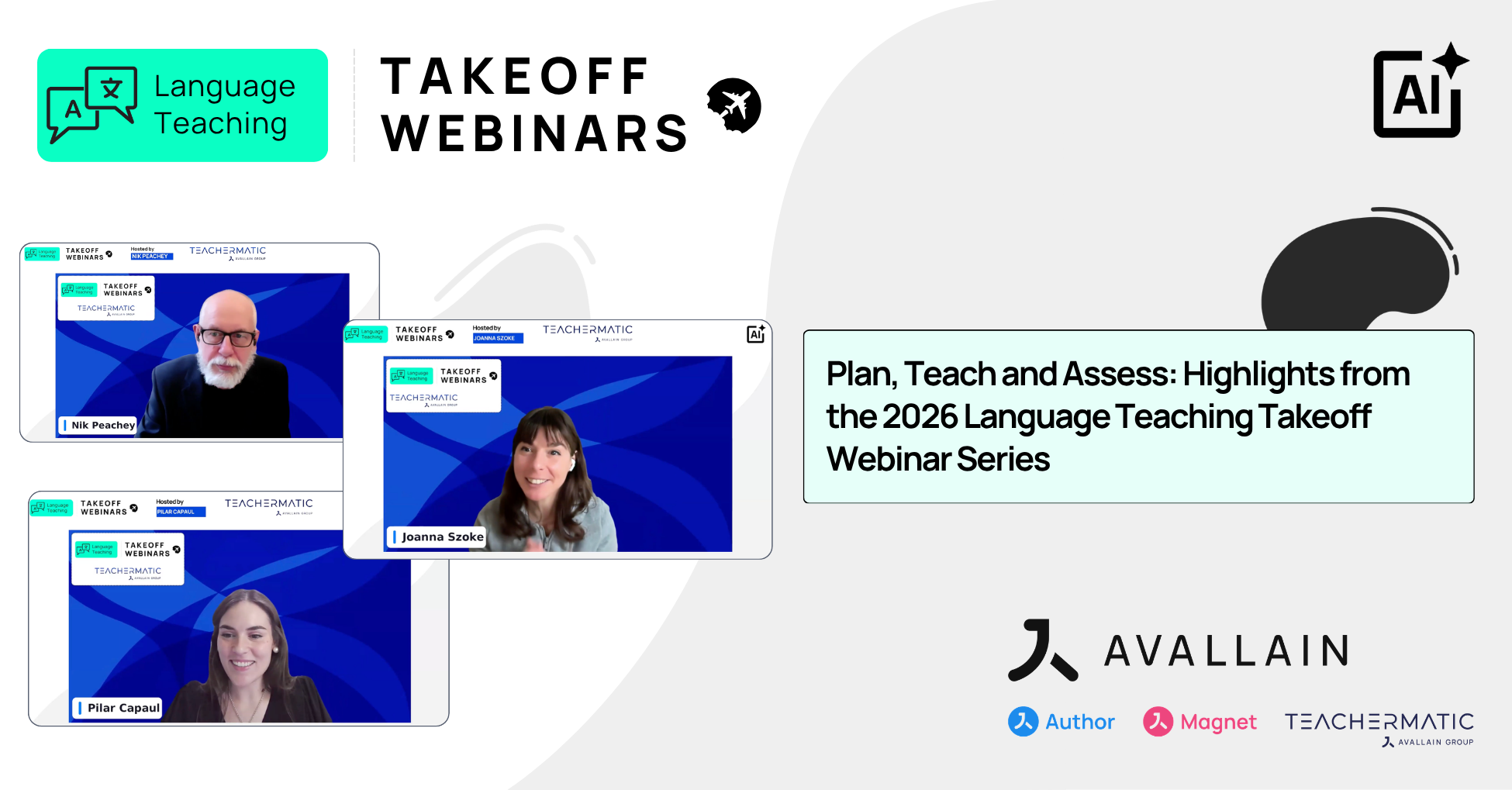
The latest Language Teaching Takeoff Webinar welcomed first-time guest host Pilar Capaul. As a language teacher and ELT content creator, she shared examples from her own lessons to demonstrate how teachers can use the TeacherMatic Language Teaching Edition to monitor understanding and create engaging activities.

What Makes Feedback Meaningful and How Can AI Enhance Teacher-Led Delivery

London, April 2026 – In ‘Provide Meaningful, Timely Feedback at Scale with the Power of AI’, Joanna Szoke examined the role feedback plays in learner progress, focusing not just on providing it, but on what makes it truly impactful. She also introduced and demonstrated the new TeacherMatic ‘Advanced Feedback’ generator, showing how it can empower teachers to deliver feedback at scale, save time and use AI in a safe, ethical and teacher-led way.

Moderated by Giada Brisotto, Senior Marketing and Sales Operations Manager at Avallain, the session focused on how feedback should do more than comment on performance. It should motivate, inspire and give learners clear opportunities to improve and progress.

Feed Forward, Not Just Feedback

One of Joanna Szoke’s favourite topics, and a key area of expertise, is feedback and assessment in language teaching. She opened the session by asking an important question: what makes feedback useful?

Joanna wanted to reiterate that effective feedback should do more than just review performance; it should help students move forward. Feedback should support progress and build confidence. 

She also highlighted the importance of timing and specificity. Feedback is most valuable when learners can still act on it and when it includes clear explanations, relevant examples and practical actions for improvement.

Finally, Joanna suggested that feedback can also come from self-reflection and peer review. This shift to student-centred learning allows for greater ownership and even reduces teacher workload. 

Reducing Workload Without Reducing Quality

Feedback is not only important, but also one of the most time-consuming responsibilities. Alongside approaches such as self-assessment and peer review, Joanna wanted to demonstrate how TeacherMatic can enable teachers to reduce workload while still delivering impactful, effective feedback.

She introduced the new ‘Advanced Feedback’ generator. Designed to support teachers while keeping professional judgement central, it streamlines feedback workflows without compromising quality. Key features include bulk uploads, Cambridge English alignment, customisable criteria, support for handwritten submissions and annotated feedback for text-based work.

With a simple setup process, teachers can create an assignment, upload the brief or paste instructions, then choose criteria-based feedback, annotated feedback or both.

For criteria-based feedback, teachers can select their own criteria or Cambridge English criteria, with options such as Accuracy and Grammar, Vocabulary and Word Choice, Coherence and Cohesion and Fluency and Communication. Teachers can also select CEFR levels before saving the assignment and inviting submissions.

Feedback at Scale, Teachers in Control

Once assignments are created, teachers can upload one submission or bulk-upload multiple pieces of student work, making it far easier to manage feedback at scale.

Joanna highlighted that efficiency should never come at the expense of responsibility. When using AI to assess or evaluate student work, teachers should be transparent with learners and seek consent before uploading submissions.

She also emphasised that the generator is there to support the feedback process, not replace it, explaining that it should ‘help me with feedback, not produce the entire feedback’, and reinforcing the importance of keeping teachers as active participants throughout the process. Teachers should review outputs, refine responses and make the final professional judgement before anything is shared with students.

Practical Outputs for Teachers and Learners

Joanna then explored the structure of the feedback provided. It is practical, clear and ready to refine.

A dedicated For Teacher view provides a more detailed breakdown, including performance against selected criteria, recognised strengths, areas for improvement and a corresponding CEFR level. Teachers also receive a written summary of the submission, alongside suggested next steps to guide future progress.

The For Student view uses more targeted language with phrasing such as ‘You can form basic sentences, but check your verb tenses.’ This creates feedback that is more personal and easier for students to act on.

Taking Feedback Further

While useful and impactful feedback has been generated, Joanna recognises that it may still need a follow-up activity to reinforce learning, such as a gap-fill activity. The refine option allows teachers to do this. They can adapt the tone, ask to increase motivation or generate additional tasks tailored to specific learner needs.

For example, teachers can request extra practice activities that target recurring mistakes. This can turn feedback into continued learning rather than a final comment.

She also demonstrated the highly practical option of uploading handwritten PDF submissions, recognising that handwritten work remains common in many teaching contexts and continues to offer value for learners.

Joanna then showcased the power of annotated feedback for text-based submissions, where comments are automatically added directly to the student’s work. These annotations can be edited, removed or expanded with the teacher’s own feedback, creating a fast and flexible way to personalise responses.

When sharing feedback with learners, teachers can export it as a PDF or copy it into a Word document for further editing. As Joanna noted, this allows teachers to retain the human element while benefiting from a more efficient workflow.

Putting Teachers and Feedback at the Centre of the Learning Journey

As Joanna highlighted throughout the session, TeacherMatic is far more than a generic AI tool; it is designed specifically for language teaching workflows. The Language Teaching Edition has been built specifically for language educators, with over 50 purpose-built generators designed to make language teaching faster and more effective.

The new ‘Advanced Feedback’ generator is a clear example of this. It reduces the workload of delivering detailed feedback by empowering teachers to provide timely, meaningful feedback at scale.

Rather than replacing professional judgement, the generator strengthens it. Teachers set the criteria, review outputs, refine responses and decide what is ultimately shared with learners. The result is a more efficient workflow that saves time, supports consistency and places teachers and feedback where they belong, at the centre of the learning journey.

Explore the TeacherMatic Language Teaching Edition

From planning CEFR-aligned lessons and creating high-quality activities to implementing structured feedback workflows and more, the TeacherMatic Language Teaching Edition is built on recognised language teaching methodologies and developed with input from the International House World Organisation, NILE, Eaquals and English UK.

Designed as a safe and ethical AI toolkit for language teachers, it delivers reliability, strong pedagogical alignment and outputs created for use inside and outside the classroom.

Next in the Webinar Series

Make Informed CEFR Alignment Decisions In the Age of AI

🗓 Thursday, 14th May
🕛 12:00 – 12:30 BST (13:00 – 13:30 CEST)

Join award-winning educator Nik Peachey as he introduces the new ‘CEFR Alignment for Teachers: In the Age of AI course.

See how to apply CEFR principles in a structured, practical way using TeacherMatic. Learn how to make informed decisions, maintain pedagogical integrity and adapt outputs to different learner contexts while retaining full professional control.


About Avallain

For more than two decades, Avallain has enabled publishers, institutions and educators to create and deliver world-class digital education products and programmes. Our award-winning solutions include Avallain Author, an AI-powered authoring tool, Avallain Magnet, a peerless LMS with integrated AI, and TeacherMatic, a ready-to-use AI toolkit created for and refined by educators.

Our technology meets the highest standards with accessibility and human-centred design at its core. Through Avallain Intelligence, our framework for the responsible use of AI in education, we empower our clients to unlock AI’s full potential, applied ethically and safely. Avallain is ISO/IEC 27001:2022 and SOC 2 Type 2 certified and a participant in the United Nations Global Compact.

Contact:

Daniel Seuling

VP Client Relations & Marketing
dseuling@avallain.com

New CEFR Alignment Course Developed in Collaboration with NILE

Avallain has launched ‘CEFR Alignment for Teachers: In the Age of AI’, a new online course for language teachers, developed in collaboration with CEFR specialists Dr Elaine Boyd and Thom Kiddle at Norwich Institute for Language Education (NILE). Available on Avallain Magnet, the course officially launches at IATEFL 2026 and supports teachers in applying CEFR principles to AI-generated and classroom materials with confidence.

New CEFR Alignment Course Developed in Collaboration with NILE

St. Gallen, April 2026 – ‘CEFR Alignment for Teachers: In the Age of AI’, a free, interactive course, is now available on Avallain Magnet, our peerless, AI-integrated learning management system. It will be officially launched at the IATEFL International Conference and Exhibition 2026 (21st–24th April). 

Developed through the shared efforts of the Avallain team and CEFR specialists Dr Elaine Boyd and Thom Kiddle at NILE, it helps language teachers align, evaluate and adapt generated texts, while strengthening their ability to make pedagogically sound decisions for learners at different CEFR levels.

A Framework That Continues to Shape Language Education

In 2001, the Common European Framework of Reference for Languages (CEFR) marked a defining moment in language education. It established a standard framework for describing language proficiency and achievement. Over the past 25 years, we can see its significant impact across course design, level benchmarking, assessment frameworks and published learning materials. 

While the CEFR has been widely used, alignment has not always been done consistently or transparently. In some instances, claims of CEFR alignment are not clearly substantiated or supported by defined principles or practices. This raises important questions about validity and professional accountability, which this course aims to address by deepening understanding and improving alignment decisions.

CEFR Alignment in the Age of AI

The rapid growth and adoption of AI in language education were another key driver behind the creation of ‘CEFR Alignment for Teachers: In the Age of AI’. Teachers can now generate context-specific, personalised learning materials more quickly than ever. This creates new opportunities to adapt content to learners’ needs with greater speed and flexibility. 

However, as seen in past misuse of the CEFR, the availability of these tools does not in itself ensure that materials are appropriate for a given level. The risk of misalignment remains, particularly where outputs are not evaluated against the descriptors, scales and principles that underpin the framework.

The course addresses this challenge and reinforces the need for informed teacher judgment by strengthening teachers’ knowledge and skills in applying the CEFR. Its aim is to build confident teachers who can make sound decisions and ensure that alignment claims are both pedagogically sound and professionally defensible.

Flexible Learning, Grounded in Practice

During the course, language teachers will gain a broad understanding of the CEFR’s scope, familiarise themselves with specific levels and scales and ultimately deepen their knowledge of its structure.

Delivered on Avallain Magnet, this course is flexible, interactive and self-paced. It will strengthen teachers’ confidence in deciding how to use texts for learners at different CEFR levels and enhance their understanding of how to adapt AI-generated texts and tasks for specific scales. 

As CEFR alignment expert Dr Elaine Boyd explains, ‘This course is designed to really help teachers align the CEFR scales and descriptors with the specific needs of their classes. And the great thing is, teachers can dip in and out of it when they have time and build their skills at their own pace.’

From Understanding to Informed Application

The course provides an overview of the CEFR, introducing its descriptors, their defining features and how one level differs from another.

Through interactive modules, participants will engage with illustrative descriptors, analyse authentic written and listening texts and practise discriminating between descriptors at different levels in the same scale, including the ‘plus levels’. 

David Moxon, Learning Technology Specialist and Content Developer at Avallain, who helped develop and publish the course on Avallain Magnet, explains, ‘While it is important for participants to gain a broad understanding of the CEFR framework, it is equally critical that they engage with it. Interactive exercises, such as benchmarking tasks, will help translate theory into practice. The learning environment also offers the opportunity for teachers to assess their progress throughout the course and evaluate their confidence in a final self-assessment.’

As AI becomes part of everyday language teaching, this course supports teachers in working more effectively with AI-generated content and is designed to complement the use of the TeacherMatic Language Teaching Edition, a trusted AI toolkit that empowers language educators ethically and safely.

Our collective efforts were not to deny the role of AI, but rather to reinforce the importance of professional judgement and ensure that alignment decisions are informed by context, pedagogy and a clear understanding of the framework. 

Reflecting on the course design, Thom Kiddle, NILE Director and CEFR specialist, notes, ‘We really enjoyed designing the course and thinking creatively about how to draw teachers’ focus to the horizontal dimension of the CEFR across all the different modes of communication, and to really engage with the way the individual descriptors are worded and what that means for learner language ability.’

Designed to Support Professional Growth

This course is intended for language teachers who are already familiar with the fundamentals of the CEFR and are looking to deepen their understanding and strengthen their practical application of it. It is also relevant for academic managers, senior teachers, syllabus designers and edtech coordinators involved in curriculum development and learning design.

While no prior knowledge of AI is required, the course recognises the growing role of AI content in language education and supports teachers working with both AI-generated and traditionally developed materials.

Official Launch at IATEFL 2026

From the 21st to the 24th of April, the Avallain team will attend the IATEFL International Conference and Exhibition 2026 in Brighton (UK). This event will bring together English language teaching professionals and enthusiasts from around the world, providing an excellent opportunity for the official launch of ‘CEFR Alignment for Teachers: In the Age of AI’.

The course reflects a joint commitment to an honest and professional approach to working with the CEFR, supporting educators in making sound, evidence-based decisions for learners at every level.


About NILE

NILE is one of the world’s biggest providers of training and development for English language teaching. Based in the UK and working internationally, NILE provides expert-led programmes online and in person, supporting educators, institutions and ministries worldwide. They are regularly involved in the development and implementation of large-scale education reform projects around the world.

NILE is a member of English UK and holds accreditation from the British Council, Eaquals and AQUEDUTO, reflecting its commitment to quality, professional standards and responsible practice.

About Avallain

For more than two decades, Avallain has enabled publishers, institutions and educators to create and deliver world-class digital education products and programmes. Our award-winning solutions include Avallain Author, an AI-powered authoring tool, Avallain Magnet, a peerless LMS with integrated AI, and TeacherMatic, a ready-to-use AI toolkit created for and refined by educators.

Our technology meets the highest standards with accessibility and human-centred design at its core. Through Avallain Intelligence, our framework for the responsible use of AI in education, we empower our clients to unlock AI’s full potential, applied ethically and safely. Avallain is ISO/IEC 27001:2022 and SOC 2 Type 2 certified and a participant in the United Nations Global Compact.

Find out more at avallain.com

_

Contact:

Daniel Seuling

VP Client Relations & Marketing
dseuling@avallain.com

International House World Organisation Launches IH OTTI on Avallain Magnet to Boost Global Teacher Training

International House World Organisation expands its digital learning ecosystem with the relaunch of IH OTTI on Avallain Magnet, combining collaborative course design, scalable delivery and a forward-looking AI strategy.

International House World Organisation Launches IH OTTI on Avallain Magnet to Boost Global Teacher Training

London, March 2026International House World Organisation (IHWO) has completed the relaunch of its IH Online Teacher Training Institute (IH OTTI) on Avallain Magnet, our peerless, AI-enhanced learning management system, marking a key milestone in advancing its digital learning environment.

A More Flexible and Intuitive Learning Experience

The implementation of IH OTTI on Avallain Magnet reflects IHWO’s commitment to enhancing both the educator and learner experience. The platform provides a more intuitive, flexible and scalable environment that supports high-quality teacher training delivery.

The implementation includes both Avallain Author, our flexible, AI-powered authoring tool, and Avallain Magnet, which enables IH OTTI to design, manage and deliver its programmes within a unified edtech ecosystem.

Shaun Wilden, IH OTTI Manager at International House World Organisation, commented:

‘Having moved all of our courses to Magnet, we’ve taken an important step forward. The platform is easier to use, more intuitive and flexible, which I believe will lead to smoother course delivery and a stronger learning experience for everyone taking our courses.’

Delivering Innovative Teacher Training at Scale

IH OTTI focuses on professional development for language educators worldwide. With Avallain Magnet, IHWO can deliver its programmes more efficiently while maintaining strong pedagogical standards.

A key feature of the IH OTTI courses is the integration of embedded discussions directly within the learning flow. This supports peer interaction, reflection and collaborative learning, which are central to effective teacher training.

Commenting on the collaboration, Giada Brisotto, Senior Marketing & Sales Operations Manager at Avallain, said:

‘With IH OTTI now fully running on Avallain Magnet, this project reflects what can be achieved when strong pedagogy, collaborative development and responsible, human-centred design come together. Through Avallain’s expertise of over twenty years in the edtech industry, we are supporting IHWO in delivering high-quality training at scale that benefits educators worldwide.’

An Ongoing Successful Collaboration

The IH OTTI implementation is also a strong example of collaboration between IHWO and Avallain. Throughout the process, IHWO has been actively involved in feature consultations and pre-release testing, which highlights how Avallain Magnet evolves in response to real client needs.

Alongside the platform implementation, IHWO is also advancing its approach to AI in education through the TeacherMatic Language Teaching Edition, Avallain’s AI toolkit designed for and refined by language educators.

This supports educators in navigating the rapid development of AI, empowering them to adopt practical and responsible strategies for integrating AI into their teaching and professional development. 

Through Avallain Intelligence, Avallain’s framework for the responsible use of AI in education, IHWO can align its programmes with ethical, safe and effective AI practices.


About Avallain

For more than two decades, Avallain has enabled publishers, institutions and educators to create and deliver world-class digital education products and programmes. Our award-winning solutions include Avallain Author, an AI-powered authoring tool, Avallain Magnet, a peerless LMS with integrated AI, and TeacherMatic, a ready-to-use AI toolkit created for and refined by educators.

Our technology meets the highest standards with accessibility and human-centred design at its core. Through Avallain Intelligence, our framework for the responsible use of AI in education, we empower our clients to unlock AI’s full potential, applied ethically and safely. Avallain is ISO/IEC 27001:2022 and SOC 2 Type 2 certified and a participant in the United Nations Global Compact.

Find out more at avallain.com

_

Contact:

Daniel Seuling

VP Client Relations & Marketing
dseuling@avallain.com

Use TeacherMatic’s AI Tools to Inspire, Monitor and Motivate in Everyday Teaching

The latest Language Teaching Takeoff Webinar welcomed first-time guest host Pilar Capaul. As a language teacher and ELT content creator, she shared examples from her own lessons to demonstrate how teachers can use the TeacherMatic Language Teaching Edition to monitor understanding and create engaging activities.

Use TeacherMatic’s AI tools to Inspire, Monitor and Motivate in Everyday Teaching

London, March 2026 – In ‘Inspire, Monitor, Motivate: Practical AI Tools for Everyday Teaching,’ Pilar showcased the ‘Did you do your homework?’ and ‘Inspiration!’ generators, demonstrating how two of her favourite TeacherMatic AI tools can be used to check learner comprehension and create engaging classroom activities. Drawing on examples from her own lessons, she showed how teachers can adapt tasks to suit different learner profiles, topics and levels.

Moderated by Giada Brisotto, Senior Marketing and Sales Operations Manager at Avallain, the session explored how everyday classroom challenges can be approached with greater confidence and new, creative ideas for lessons and activities.

An AI Toolkit for Everyday Language Teaching Tasks

Pilar introduced the TeacherMatic Language Teaching Edition, an AI toolkit she values for the range of practical tasks it supports in everyday teaching. With more than 50 generators designed for language educators, teachers can plan lessons, adapt materials and generate meaningful activities that contextualise language for learners. 

She also highlighted that teachers can select the methodology they want to apply, ensuring that the generated activities and resources align with their preferred teaching approach.

Assessing What Students Really Understood

Homework is an important starting point for any lesson. As students enter the classroom, Pilar wants a quick sense of whether they engaged with the material and understood the key ideas. As she explained during the session, ‘I don’t just want to know if they did it. I want to know if they understood it.’

Simply asking students to raise their hands to confirm they completed a homework task rarely provides this level of insight. Instead, our host demonstrated how teachers can use the ‘Did you do your homework?’ generator to turn homework checks into short activities that reveal what learners have actually understood.

Turning Homework Checks into a Lesson Warm-Up

Using a homework task she had set for an upper-intermediate class studying environmental topics, Pilar illustrated her approach to assessing comprehension. Students were asked to watch a video at home and create a mind map highlighting key information. To ensure understanding, she uploaded the video transcript to the ‘Did you do your homework?’ generator, and asked it to produce three short summaries, only one of which correctly reflects the content.

Pilar tailored the activity to B1 learners with a medium-length output. She also included an optional description of the class: energetic teenagers with short attention spans who are accustomed to fast-paced content on platforms like TikTok. The goal was to create something that would capture their attention immediately, while illustrating how teachers can also adapt content to specific learner needs and different classroom contexts.

Refining for Real Classroom Settings

Below the generated content, teachers can find an answer key. Acknowledging that teachers often teach several classes and set many tasks, this resource provides additional reassurance. 

While the generated result already provided what was needed to evaluate learner understanding, she decided to push the platform a little further by considering her learner profile more closely. These students may not be particularly engaged by a topic such as pollution, so she refined the results by suggesting ‘add jokes to make it engaging for teenagers.’ Pilar reminded teachers that AI can also be guided in other ways, for example, by asking it to focus on specific grammar points, such as the present simple, to use narrative tenses or simply to make the activity more playful and engaging.

The updated output showed how even small adjustments can make a noticeable difference. Rather than relying on a standard textbook-style activity, she had something tailored to her learners. She added the task to her lesson plan and asked students to identify the correct summary, creating a lively warm-up at the start of the lesson. This activity encourages students to revisit the homework, reflect on what they have learned and discuss the topic together, while also giving the teacher a clear sense of how well they have understood the video.

Finding Inspiration When a Topic Feels Uninteresting

Sometimes teachers need to cover topics that are not immediately engaging. The ‘Inspiration!’ generator enables teachers to quickly and easily make these lessons feel relevant, meaningful and motivating. 

To demonstrate this generator, our host used a group of her own adult learners. These are A2-level students who had studied English before but were returning to it after a break. They had practised the present simple many times and were beginning to feel frustrated, even though they still needed more practice. In this case, the question was: how do we approach the topic differently and make it fresh again?

Creating and Refining Activities for Greater Engagement

Describe the learner profile: in Pilar’s example, this is a group of busy adults who want to make progress quickly. She then explored the additional settings, selecting the Communicative Language Teaching model so the activities would focus on speaking practice.

The result was a range of classroom ideas connected to the topic ‘Routines around the world’, including matching routines to different cultures, role-play activities based on daily schedules and short quizzes designed to practise question formation. Rather than repeating familiar coursebook exercises, the activities provided new ways to approach the same language point while keeping learners actively involved.

She also illustrated how these ideas can be refined further. When the webinar participants suggested turning the activities into games, she typed ‘include more games’ into the refine box. The regenerated output included additional suggestions, such as board games, creating opportunities for students to practise the language while focusing on interaction and friendly competition.

From Ideas to Real Classroom Use

Throughout the session, it was emphasised that the value of these generators lies in how teachers use and adapt the results. She also highlighted the information icon available within each generator, which provides guidance, examples and practical tips for getting the most out of each tool.

Once activities are generated, they can be exported and reused in future lessons. Pilar advised users to save outputs so they can be incorporated into lesson planning, revisited for revision activities or shared with colleagues to see how they work in different classrooms. In this way, the generated ideas become part of a broader teaching process rather than a one-off resource.

By combining quick activity generation with teacher judgement and refinement, the TeacherMatic Language Teaching Edition can support teachers in creating lessons that remain engaging, adaptable and relevant to their learners.

Explore the TeacherMatic Language Teaching Edition

The TeacherMatic Language Teaching Edition provides language educators with practical, safe AI tools for planning lessons, generating engaging classroom activities and developing engaging language learning experiences. Teachers remain in control of every step, reviewing and refining outputs so they reflect their teaching approach, learners and classroom context.

Next in the Webinar Series

Provide Meaningful, Timely Feedback at Scale with the Power of AI

🗓 Thursday, 16th April
🕛 12:00 – 12:30 BST (13:00 – 13:30 CEST)

Join Joanna Szoke, freelance teacher trainer and AI in education specialist, for the next session in the Language Teaching Takeoff Webinar Series as she explores the challenges of delivering meaningful, timely feedback and the role AI can play in supporting this process. 

See the new Advanced Feedback generator in action, designed to support feedback workflows at scale while maintaining teacher oversight.


About Avallain

For more than two decades, Avallain has enabled publishers, institutions and educators to create and deliver world-class digital education products and programmes. Our award-winning solutions include Avallain Author, an AI-powered authoring tool, Avallain Magnet, a peerless LMS with integrated AI, and TeacherMatic, a ready-to-use AI toolkit created for and refined by educators.

Our technology meets the highest standards with accessibility and human-centred design at its core. Through Avallain Intelligence, our framework for the responsible use of AI in education, we empower our clients to unlock AI’s full potential, applied ethically and safely. Avallain is ISO/IEC 27001:2022 and SOC 2 Type 2 certified and a participant in the United Nations Global Compact.

Contact:

Daniel Seuling

VP Client Relations & Marketing
dseuling@avallain.com

Plan a Comprehensive and Impactful Course with TeacherMatic

The latest Language Teaching Takeoff webinar welcomed back educator and edtech specialist Nik Peachey, who explored how the TeacherMatic Language Teaching Edition can support the full cycle of planning: from course design to detailed lesson preparation, through to meaningful lesson wrap-ups that reinforce learning.

Plan a Comprehensive and Impactful Course with TeacherMatic

London, February 2026 – In ‘Plan Smarter and Teach with Confidence,’ Nik focused on course planning and its often time-intensive components. He demonstrated how teachers, academic managers and directors of studies can use TeacherMatic’s AI generators, including the ‘Scheme of Work / Curriculum Plan’ generator, to support this work while maintaining professional control.

Moderated by Giada Brisotto, Senior Marketing and Sales Operations Manager at Avallain, the session focused not only on planning but on developing it in greater detail, from course design through to fully structured lessons and effective wrap-ups.

Before Planning a Course 

Nik began by acknowledging the time-intensive nature of developing effective courses. He emphasised the importance of reducing repetitive preparation, building clear planning structures and aligning content with learner levels. To support this process, TeacherMatic provides AI tools for each stage of course development, enabling teachers to build structured plans while keeping content aligned with the CEFR.

He also demonstrated how generators can be quickly located using simple filter settings. Users can filter by task or role to surface the most relevant tools and favourite the ones they use most often, making the planning process more efficient.

Before moving into the generators themselves, Nik encouraged participants to consider lesson wrap-ups as part of the planning process. This step is often overlooked but plays an important role in reinforcing learning and supporting retention at the end of each lesson.

Creating a Course Plan

Nik opened the demonstration with the ‘Scheme of Work / Curriculum Plan’ generator, showing how users can plan a course for a specific group of learners. Using the Sustainable Development Goals as the course theme, he defined key topics, set the number of sessions to six and selected a table format at the B1 level. Additional details, such as learner age and optional support materials, were added to personalise the course further.

He also selected a pedagogical model, choosing Task-Based Learning, and showed how course creators can receive guidance on learning needs. The result was a clearly structured scheme of work presented in table form, with six session titles and supporting descriptions. Each session followed a task-based framework with pre-task, main task, post-task and wrap-up stages, and concluded with a review and action plan. 

Building Out Individual Lessons

Once a course plan is in place, each session needs to be developed in greater detail. A lesson outline alone is rarely sufficient, so the focus shifted to how the ‘Lesson Plan’ generator can expand a single session into a fully structured lesson. Nik demonstrated how to define a topic, clarify lesson aims, and set timing and a pedagogical model, all while keeping the lesson aligned with CEFR levels, skills and subscales.

The generated plan followed a clear, task-based structure. It was organised to include an introduction, main activity, language focus and summary, with suggested resources and homework. This provided a detailed foundation that could be refined and adapted, enabling teachers, academic managers and directors of studies to move from outline to delivery with greater confidence, while reducing preparation time. 

Reinforcing Learning as Part of the Plan

The final stage of the workflow focused on lesson wrap-ups. This is an area often overlooked in planning but essential for reinforcing learning and encouraging reflection.

Using the ‘Lesson Wrap-Up’ generator, Nik showed how teachers can set the topic, CEFR level and learner profile, as well as include specific learning needs or supporting materials. The generator then produces a range of structured activities designed to check understanding and prompt reflection. Activities included true-or-false checks, gap fills, discussion prompts and poster creation, which Nik noted was a particularly effective way for learners to reflect while engaging more creatively with the topic.

By building this final stage into the planning process, teachers can close lessons with purpose, allowing learners to review, reflect and retain key language while ensuring that each session connects clearly to the wider course.

From Big Picture to Lesson Reflection

A strong course considers each stage of the teaching process, from the initial structure through to the reinforcement of learning at the end of a lesson. Nik demonstrated how this full workflow can be supported within TeacherMatic, progressing from a course plan to detailed lesson planning and, finally, to lesson wrap-ups that consolidate learning.

With CEFR alignment embedded throughout, teachers can build from the big picture into individual sessions and then use additional generators to create supporting materials. Nik demonstrated how filters, such as ‘Speaking’ and ‘Reading’, can quickly identify relevant tools, enabling teachers to produce resources aligned with lesson objectives. Plans and materials can be saved and shared across a school account, supporting collaboration and reducing duplication. 

Together, this structured flow enables teachers, academic managers and directors of studies to plan with greater clarity, maintain professional control and ensure that each lesson contributes meaningfully to the wider course.

Explore the TeacherMatic Language Teaching Edition

For educators seeking greater clarity and consistency in planning, the TeacherMatic Language Teaching Edition provides CEFR-aligned generators to support course design, lesson development, course materials and lesson wrap-ups, with the flexibility to refine and adapt plans across contexts.

Next in the Webinar Series

Inspire, Monitor, Motivate: Practical AI Tools for Everyday Teaching

🗓 Thursday, 12th March
🕛 12:00 – 12:30 GMT | 13:00 – 13:30 CET

Join first-time guest host Pilar Capaul, language teacher and ELT content creator, for a practical session focused on real classroom use cases. 

Pilar will demonstrate how two TeacherMatic generators can support everyday teaching by drawing on examples from her own lessons. See how the ‘Did you do your homework?’ generator can be used to check understanding and completion, and how the ‘Inspiration!’ generator can spark motivation and engagement.


About Avallain

For more than two decades, Avallain has enabled publishers, institutions and educators to create and deliver world-class digital education products and programmes. Our award-winning solutions include Avallain Author, an AI-powered authoring tool, Avallain Magnet, a peerless LMS with integrated AI, and TeacherMatic, a ready-to-use AI toolkit created for and refined by educators.

Our technology meets the highest standards with accessibility and human-centred design at its core. Through Avallain Intelligence, our framework for the responsible use of AI in education, we empower our clients to unlock AI’s full potential, applied ethically and safely. Avallain is ISO/IEC 27001:2022 and SOC 2 Type 2 certified and a participant in the United Nations Global Compact.

Contact:

Daniel Seuling

VP Client Relations & Marketing
dseuling@avallain.com

Make Exam Preparation More Engaging and Effective

The first Language Teaching Takeoff Webinar of the year welcomed AI in education specialist and freelance teacher trainer Joanna Szoke, who explored how teachers can use the TeacherMatic Language Teaching Edition to create dynamic, engaging exam practice.

Make Exam Preparation More Engaging and Effective

London, January 2026 – In ‘Create Dynamic and Engaging Exam Practice for Your Students’, Joanna discussed assessment and feedback. She demonstrated how teachers can use the ‘Cambridge Style Exam Prep Generator’ and ‘Worksheet’ generator to produce targeted materials for learners preparing for high-pressure assessments.

Moderated by Giada Brisotto, Senior Marketing and Sales Operations Manager at Avallain, the session reinforced the importance of moving beyond assessment as simply a grade, positioning it instead as an opportunity to support learner progress and give teachers clearer insight into what to reinforce and revisit.

Assessment and Feedback

Joanna began by emphasising the close relationship between assessment and feedback, describing them as a continuous cycle rather than separate classroom tasks. When assessment is used as an ongoing process, it becomes a practical way to identify what learners understand, where they need further support and how teachers can adapt to meet those needs.

Rather than treating assessment as an endpoint, Joanna encouraged teachers to use it as a guide to strengthen learner progress and to ensure that feedback remains purposeful and actionable.

Exam English vs Real-Life English

Exam preparation can easily become focused on format and technique, but meaningful practice also needs to develop transferable communication skills. Joanna stressed the importance of connecting exam tasks to real-life language use. By making this connection, teachers ensure that learners can apply what they practise beyond the assessment setting.

Joanna explained how exam-style activities can be adapted to reflect authentic contexts and learner interests, keeping preparation engaging while still targeting the specific demands of the assessment. This approach supports both exam readiness and broader language development without compromising either.

Cambridge-Style Exam Practice in Action

To bring these ideas into a practical teaching context, Joanna demonstrated the ‘Cambridge Style Exam Prep Generator’ and how language educators can use it to create practice tasks aligned with Cambridge English levels A2 Key, B1 Preliminary, B2 First and C1 Advanced. Depending on the level selected, the generator supports different paper formats, including Reading and Writing at A2 Key, Reading at B1 Preliminary and Reading and Use of English at both B2 First and C1 Advanced.

Joanna highlighted how quickly teachers can generate exam-style materials, then refine them to suit their learners and classroom context. Teachers can adjust the topic, language focus or task demands to create more relevant practice and keep preparation adaptable. She also emphasised that these materials are intended solely for practice. Teachers should use them alongside official past papers and published exam preparation resources, with teacher review and adaptation remaining essential.

Flexible Worksheets for Targeted Practice

To build level-appropriate practice materials that can be adapted to different teaching contexts, Joanna also showcased the ‘Worksheet’ generator. Worksheets are a reliable format for reinforcing learning and checking understanding, particularly during assessment preparation.

The demonstration highlighted how teachers can generate worksheets on almost any topic, select activity types and adjust outputs to reflect learner profiles and specific needs. Teachers can also refine results further, remove suggested answers where appropriate and export content into editable formats for layout changes and added visuals. This flexibility makes it easier to create engaging, targeted practice while keeping teacher review and adaptation central.

Supporting Confident Exam Preparation

Effective exam preparation is not only about measuring performance. It is also an opportunity to strengthen learning through purposeful assessment, timely feedback and targeted practice that reflects real assessment demands.

With CEFR alignment built into the TeacherMatic Language Teaching Edition, teachers can generate level-appropriate materials that support structured preparation and classroom needs. By combining tools such as the ‘Cambridge Style Exam Prep Generator’ and the ‘Worksheet’ generator with professional judgement and refinement, teachers can create engaging practice that supports learner confidence and readiness when it matters most.

Explore the TeacherMatic Language Teaching Edition

Built for language teaching, the TeacherMatic Language Teaching Edition enables teachers to create CEFR-aligned materials for exam preparation, assessment, classroom practice and more, with flexibility to refine outputs for different learners and contexts.

Next in the Webinar Series

Plan Smarter and Teach with Confidence

🗓 Thursday, 12th February
🕛 12:00 – 12:30 GMT | 13:00 – 13:30 CET

Join award-winning educator Nik Peachey as he demonstrates how to use planning generators in the TeacherMatic Language Teaching Edition. See AI tools such as the ‘Scheme of Work/Curriculum Plan’ generator, which are designed to support teachers, academic managers and directors of studies in reducing repetitive preparation and creating structures that can be adapted to any teaching context.


About Avallain

For more than two decades, Avallain has enabled publishers, institutions and educators to create and deliver world-class digital education products and programmes. Our award-winning solutions include Avallain Author, an AI-powered authoring tool, Avallain Magnet, a peerless LMS with integrated AI, and TeacherMatic, a ready-to-use AI toolkit created for and refined by educators.

Our technology meets the highest standards with accessibility and human-centred design at its core. Through Avallain Intelligence, our framework for the responsible use of AI in education, we empower our clients to unlock AI’s full potential, applied ethically and safely. Avallain is ISO/IEC 27001:2022 and SOC 2 Type 2 certified and a participant in the United Nations Global Compact.

Contact:

Daniel Seuling

VP Client Relations & Marketing

dseuling@avallain.com

Responsibly Adopting AI in Language Education

For the final episode of 2025, the Language Teaching Takeoff Webinar Series brought together experts from across language education and edtech to examine how AI can be adopted responsibly in teaching practice.

Responsibly Adopting AI in Language Education

London, December 2025 – In ‘Transforming Language Teaching with Ethical AI: A Panel Discussion’, educator and edtech consultant Nik Peachey, teacher and ELT content creator Pilar Capaul, teacher trainer and lecturer Joanna Szoke, and Ian Johnstone, VP Partnerships at Avallain, discussed ethical considerations, institutional responsibility and practical ways to integrate AI with confidence.

Moderated by Giada Brisotto, Senior Marketing and Sales Operations Manager at Avallain, the session examined how AI toolkits, such as the TeacherMatic Language Teaching Edition, can be used in teaching practice to improve efficiency without diminishing teacher agency.

The Potential and Advantages of AI in Language Teaching

Opening the discussion, Nik identified time as one of the most persistent challenges for language teachers, from marking and lesson planning to adapting materials for specific classroom contexts. He noted that while coursebooks provide structure, they are often designed for global audiences and may not fully reflect the needs of individual learners.

Nik explained that AI can help teachers adapt and extend materials more efficiently, supporting personalisation without adding complexity. He referenced AI toolkits such as the TeacherMatic Language Teaching Edition, where generators and CEFR-aligned inputs reduce reliance on prompt-writing skills and support differentiation, especially for learners with diverse needs.

From a teacher training perspective, Joanna reinforced this point by highlighting speed and responsiveness as key advantages. She explained how AI tools enable teachers to generate resources for niche teaching contexts and specific learner profiles, allowing educators and trainers to focus more on pedagogy and professional reflection rather than on content production.

AI in the Classroom: Practical Examples that Move Beyond Content Creation

Drawing on classroom experience, Pilar discussed how AI-generated activities can serve clear learning purposes rather than simply producing content.

Using TeacherMatic generators like ‘Have you done your homework’, she replaces a simple homework check with a diagnostic warm-up that reveals whether learners have truly understood a task, enabling her to decide how the lesson should progress and where support is most needed.

To make reading more purposeful, the ‘Ask an Expert’ generator prompts learners to read with intent, question information and evaluate meaning rather than read passively.

The Role of Education Technology Providers in Ethical AI Adoption

Shifting the discussion to institutional responsibility, Ian noted that education technology companies must ensure AI does not begin to lead educational practice. While new capabilities may appear compelling, he stressed that decision-making should remain educator-led, with tools designed to support teaching rather than dictate it.

Ian highlighted the importance of sustained research, classroom piloting and collaboration with educators and institutions to refine how AI is deployed in practice. He also emphasised the role of providers in sharing what they learn through structured guidance and training, empowering teachers and organisations to build confidence, develop informed approaches and navigate the broader shift AI is bringing to language education.

Where Does AI Add the Most Value for Language Teachers

The benefits of AI depend primarily on what teachers need to achieve. Joanna explained that for planning and administrative work, it can reduce time spent on tasks such as drafting reports or lesson outlines, provided teachers remain attentive to the data they share and treat outputs as a starting point rather than a final version. At the same time, she strongly argued for classroom use, where working with AI alongside students creates opportunities to model critical evaluation, ethical decision-making and responsible use, helping learners understand not just how to use these tools but also how to question them.

Ian reaffirmed that responsibility cannot sit solely with teachers. He added that education technology companies must take an active role in designing safeguards into AI toolkits, using clear interface guidance to discourage inappropriate use and implementing measures that reduce the risk of sensitive data being shared. By embedding these considerations at both the practical and systemic levels, edtech providers can ensure ethical use is built in by design, rather than relying on individual educators to navigate these challenges on their own.

Getting Started with AI in Daily Practice

Nik encouraged teachers to start small and let curiosity guide their first steps, suggesting they focus on a single area, such as planning, feedback or material creation, rather than trying to do everything at once. He advised identifying everyday pain points and using AI as a conversational partner to explore possible approaches. At the same time, Joanna added that teachers should not overcomplicate the process, noting that simple questions and natural interaction are often the most effective way to begin building confidence.

Ethics, Transparency and Authentic Classroom Use

Returning to the ethics question, Ian stressed the importance of preserving the dialogic nature of learning, ensuring that interaction remains a meaningful exchange rather than a one-way output. He explained that TeacherMatic is designed as an educational AI toolkit, with a built-in chat environment and filters that set clear boundaries for what can be shared and generated in a learning context, reducing the risk of inappropriate content or data misuse. 

At an organisational level, Ian highlighted Avallain’s responsibility to underpin this work through ongoing research conducted by a dedicated lab, where academic expertise focuses on ethical frameworks, regulatory developments and the broader implications of AI use, including environmental impact. Together, these layers ensure that safeguards are embedded by design and continuously reviewed as technology evolves.

From a classroom perspective, Pilar examined how authenticity is maintained when AI-generated materials are shaped around real learners. Using the TeacherMatic AI toolkit, she highlighted the use of generators such as ‘Inspiration!’ and ‘Adapt your Content’ to create multiple versions of activities on the same topic. This allows students to work at an appropriate level, feel recognised and engage more confidently, reinforcing that AI-generated materials remain meaningful only when guided by teacher insight and an understanding of learner context.

Assessment, Exam Preparation and the Limits of Automation

Joanna addressed the use of AI in assessment by drawing a clear distinction between formative and summative contexts. For formative assessment, she highlighted the value of AI in generating feedback and action points to support ongoing learning, while emphasising the need for professional judgement. In summative contexts, she noted that although automated scoring can play a role for specific task types, final decisions should remain with the teacher, adding that when working with AI, ‘I will be curious and cautious.’

Building on this, Ian reinforced that generative AI should not be positioned as a decision-maker in summative assessment. He explained that language models form a new understanding each time they evaluate a piece of work and do not draw on the accumulated experience of a trained language teacher. As a result, they can offer multiple, variable interpretations rather than a consistent, auditable evaluation. For summative contexts, he argued, there should always be a role for teacher review and moderation, noting that only rule-based, algorithmic approaches, where assessment criteria are explicitly defined and auditable, may be appropriate for high-stakes decisions.

Looking at day-to-day teaching, Pilar drew on her experience preparing learners for international exams, particularly teenagers who may feel disengaged or under pressure. She explained how the rollout of the TeacherMatic ‘Cambridge Style Exam Prep Generator’ has enabled her to personalise exam-style activities around familiar topics, helping sustain motivation while maintaining relevance. Working in a bilingual setting with varying proficiency, she also described how creating resources on the same content at different levels enabled all students to prepare together while still working at a level that felt appropriate and achievable.

Looking Ahead: Supporting Teachers as AI Tools Evolve

AI toolsets will increasingly become multimodal, enabling teachers to generate audio, images, video and presentations alongside text. Nik noted that this could significantly reduce the time teachers spend searching for suitable media, allowing them to create more stimulating, multimedia-rich lessons and adapt more easily to online or blended learning environments.

Ian expanded on this by placing these developments within a broader roadmap for educational AI. While TeacherMatic already supports the creation of worksheets and lesson plans, he explained that interactive learning experiences are the next step. Drawing on Avallain’s background in interactive content, he outlined how integrating generative capabilities with interactive courseware will enable teachers to deliver more engaging activities and assignments directly in the classroom, rather than treating interactivity as a separate layer.

Joanna emphasised that technology alone is not enough. She stressed the importance of building teacher confidence and critical awareness, encouraging educators to experiment, ask questions and practise with AI tools while remaining alert to hype. Maintaining professional judgement, she argued, means staying attentive to how outputs are generated and preserving a healthy distance between automated suggestions and pedagogical decision-making.

Ethical Adoption as a Shared Responsibility

The value of AI in language education depends on how thoughtfully it is adopted. When pedagogy leads, and professional judgement remains central, AI toolkits, such as TeacherMatic, can empower teachers to manage their workload, design purposeful learning activities and respond more effectively to diverse learner needs.

At the same time, ethical adoption requires shared responsibility. Teachers need space to experiment critically and build confidence, while education technology providers must ensure safeguards, transparency and ongoing research are embedded by design. 

Explore the TeacherMatic Language Teaching Edition

The TeacherMatic Language Teaching Edition is an AI toolkit specifically designed for language educators. Through its purpose-built AI generators, teachers can create activities, support planning, approach assessment and more with greater consistency and control, while reducing time spent on routine tasks.

Next in the Webinar Series

Create Dynamic and Engaging Exam Practice for Your Students

🗓 Thursday, 22nd January
🕛 12:00 – 12:30 GMT | 13:00 – 13:30 CET

The next edition of the Language Teaching Takeoff Webinar Series will welcome Joanna Szoke. A freelance teacher trainer and AI in education specialist, she will open the new year with a practical session focused on exam preparation.

Her first episode will demonstrate the ‘Cambridge Style Exam Prep Generator’ within the TeacherMatic Language Teaching Edition, alongside other generators designed for assessment-focused use. The session will explore how teachers can create engaging exam-style practice, adapt tasks to different learner needs and approach assessment in ways that support confidence and progression.


About Avallain

For more than two decades, Avallain has enabled publishers, institutions and educators to create and deliver world-class digital education products and programmes. Our award-winning solutions include Avallain Author, an AI-powered authoring tool, Avallain Magnet, a peerless LMS with integrated AI, and TeacherMatic, a ready-to-use AI toolkit created for and refined by educators.

Our technology meets the highest standards with accessibility and human-centred design at its core. Through Avallain Intelligence, our framework for the responsible use of AI in education, we empower our clients to unlock AI’s full potential, applied ethically and safely. Avallain is ISO/IEC 27001:2022 and SOC 2 Type 2 certified and a participant in the United Nations Global Compact.

Contact:

Daniel Seuling

VP Client Relations & Marketing
dseuling@avallain.com

Empowering Every Role in Language Education

The seventh instalment of the Language Teaching Takeoff Webinar Series explored how the TeacherMatic Language Teaching Edition supports not only teachers but also school leaders, administrators and other institutional roles.

Driving Institutional Excellence in Language Education with AI

London, November 2025 – In ‘Beyond the Classroom: Empowering Every Role in Language Education’, award-winning educator, author and edtech consultant, Nik Peachey demonstrated four AI generators specifically designed to streamline planning, policy-making, analysis and strategy, while enabling users to exercise ethical oversight and agency.

Moderated by Giada Brisotto, Senior Marketing and Sales Operations Manager at Avallain, the session illustrated how TeacherMatic extends beyond classroom resource creation to supporting institutional efficiency and decision-making at all levels.

Safe AI Tools for Institutional Efficiency

The TeacherMatic Language Teaching Edition includes over 50 AI generators, offering safe, pedagogically aligned tools specifically designed for language education. Whether you are a Director of Studies (DOS), Assistant Director of Studies (ADOS) or working towards these roles, TeacherMatic also provides generators that enable leaders and administrators to streamline their workflow. 

Each AI generator features pre-programmed prompts designed for precise educational purposes, reducing the need for users to have prompt-writing expertise. To support quick access to the right tools, Nik demonstrated how the generators can be filtered by roles, including Teacher, Leadership, Administrator and Marketing, making it easier to discover those aligned with specific responsibilities. He showed how frequently used tools can be favourited and highlighted how each generator includes clear descriptions and user suggestions.

Practical AI Generators to Support Leaders and Administrators

Automate and Simplify Planning

For those who coordinate school events, inspections or formal activities, the Project or Event Planning generator turns a complex task into a logical, manageable process. Nik demonstrated that by entering specific details, such as a descriptive title like ‘School Inspection’ and key factors such as ‘peer review beforehand’ or ‘parental communication’, helps users avoid generic results. 

The generator produces a detailed plan with actionable tasks and a table breakdown, where users can expand specific sections for more detail. Results can be exported in different formats, making it simple to share and collaborate. By automating and simplifying routine planning, this tool saves time, reduces stress and enables operational leaders to focus on execution rather than building plans from the ground up.

Create Tailored, Practical Strategies

The Draft Strategy generator is particularly useful for institutional leaders responsible for implementing new initiatives. It supports the creation of tailored, actionable strategies. Users provide key context such as their role, type of institution and strategic objectives, and the generator produces a structured draft that highlights goals and steps. Leaders can expand sections to address specific institutional priorities, providing a practical framework to guide decisions and coordinate teams effectively. By shaping outputs from user input, the generator empowers leaders to plan confidently and act strategically.

Structured Policy Creation for Confident Decisions

Drafting a policy statement can be daunting, especially when it’s unclear where to begin. The Draft a Policy Statement generator provides leaders with a structured starting point and guides them through the process with suggested inputs. Users can enter their institution type and add optional guidance or reference documents that the policy must align with, creating a draft that reflects the specific context and requirements of their organisation. While the generator delivers a strong, customised foundation that simplifies the initial stages of policy creation, Nik reminds users that maintaining oversight is essential to ensure compliance and alignment with guidelines.

Easily Uncover Patterns and Insights

While it may appear simple at first glance, the Insight Generator can be immensely valuable. A leader or administrator can upload a dataset and receive a summary analysis along with suggested questions, making it easier to uncover patterns and insights. Nik highlighted how this tool can help create student personas, track engagement trends or identify retention issues, giving leaders a clearer picture of learner performance and institutional dynamics. By translating raw data into valuable insights, the generator enables leaders to focus on strategic decisions and targeted interventions rather than manual data analysis.

Additional Resources to Support Strategic Leadership

In addition to these four generators, Nik highlighted several other tools that support leaders and administrators across an institution. For example, the SMART targets generator empowers leaders to set clear, measurable objectives, while the Improvement Plan generator guides structured staff development planning. The Self Assessment Advisor facilitates reflection on personal performance and identifies areas for growth. Together, these AI generators and additional tools extend beyond classroom-focused tasks to strategic and proactive leadership, enabling teams and institutions to achieve greater impact.

Bridging Classroom and Institutional Excellence

Excellence in language education relies on equipping leaders, managers and teachers with the right support. The TeacherMatic Language Teaching Edition offers pedagogically aligned AI tools that make it easier to develop customised plans, policies, analyses, strategies and more, ensuring clarity and cohesion across the institution.

Aligned with Avallain’s commitment to responsible, human-centred technology, TeacherMatic encourages ethical application and frees users to focus on facilitation and implementation, strengthening both classroom and institutional practice.

Explore the TeacherMatic Language Teaching Edition

The TeacherMatic Language Teaching Edition provides sector-specific, CEFR-aligned AI generators that support both classroom and institutional practice. Teachers, leaders and administrators can use the platform to create tailored lessons, structured documentation, analyses and more, all designed to meet the unique needs of their learners and institutions.

Next in the Webinar Series

Transforming Language Teaching with Ethical AI: A Panel Discussion

🗓 Thursday, 11th December
🕛 12:00 – 13:00 GMT | 13:00 – 14:00 CET

In this special episode of the Language Teaching Takeoff Webinar Series, join an expert panel as they explore how ethical AI is transforming language education. Pilar Capaul, Nik Peachey, Joanna Szoke and Ian Johnstone will share practical insights and real classroom examples, demonstrating how tools like the TeacherMatic Language Teaching Edition empower teachers to save time, foster creativity, retain the human touch and integrate AI responsibly, offering guidance for both classroom practice and institutional leadership.


About Avallain

For more than two decades, Avallain has enabled publishers, institutions and educators to create and deliver world-class digital education products and programmes. Our award-winning solutions include Avallain Author, an AI-powered authoring tool, Avallain Magnet, a peerless LMS with integrated AI, and TeacherMatic, a ready-to-use AI toolkit created for and refined by educators.

Our technology meets the highest standards with accessibility and human-centred design at its core. Through Avallain Intelligence, our framework for the responsible use of AI in education, we empower our clients to unlock AI’s full potential, applied ethically and safely. Avallain is ISO/IEC 27001:2022 and SOC 2 Type 2 certified and a participant in the United Nations Global Compact.

Contact:

Daniel Seuling

VP Client Relations & Marketing
dseuling@avallain.com

Develop Empowered Communicative Learners with Safe and Accurate AI Tools

The latest Language Teaching Takeoff Webinar showcased four powerful TeacherMatic Language Teaching Edition generators that can transform speaking lessons and foster confident, capable communicators.

Develop Empowered Communicative Learners with Safe and Accurate AI Tools

London, October 2025 – In last week’s webinar, ‘Enhancing Speaking Lessons with CEFR-Aligned Effective Generators’, we explored how teachers can use safe and accurate AI tools to help students engage, express ideas, think critically and build confidence in speaking. Pedagogy expert and award-winning educator Nik Peachey demonstrated how the generators can be filtered by skill, selecting ‘Speaking’ to highlight key tools suitable for developing speaking activities. He then guided participants through four effective generators: Dialogue Creator, Differing Opinions, Debate and Discussion Topics

Moderated by Giada Brisotto, Senior Marketing and Sales Operations Manager at Avallain, the session illustrated how these AI generators can transform lessons into interactive, thought-provoking experiences.

Formal vs Informal Speaking Practice

As learners develop their speaking skills, it’s essential to help them adapt to diverse speaking contexts, which is key to building confident communicators. Nik firstly highlighted the importance of formal and informal practice with the Discussion Topics and Debate generators. 

The Discussion Topics generator creates stimulating, level-appropriate conversations. It produces meaningful and engaging discussions for learners at any level, whether A1 or C1. Teachers can include optional supporting materials to tailor activities to students’ current knowledge, creating relevant and interactive interactions.

For more structured interactions, the Debate generator creates authentic, formal debate scenarios. Students can practise precise language and persuasive techniques while gaining confidence in presenting their ideas in a formal setting.

Combine Reading and Speaking

Building on the effective Debate and Discussion Topics generators, which enable teachers to create meaningful, level-appropriate speaking activities, Nik Peachey then introduced and demonstrated the Differing Opinions generator.

Designed to bridge reading and speaking, this generator enables teachers to create activities encouraging learners to analyse viewpoints, express ideas and engage in structured, reflective discussions. By producing balanced arguments on any chosen topic, it empowers students to develop both reasoning and communication skills, leading to richer classroom interactions and deeper engagement with language.

Developing Confident Opinions

The Differing Opinions generator allows teachers to generate multiple perspectives on a single topic, which students can read, compare and respond to. This creates opportunities for learners to evaluate ideas, express agreement or disagreement and justify their opinions using targeted language. The exercise builds confidence in articulating thoughts and helps students develop persuasive and analytical language skills in a supportive classroom setting.

Task-Based Learning

Nik demonstrated how the generator can be integrated into task-based learning. Learners can read a set of opinions, discuss them in groups, record their responses and later reflect on how they expressed themselves. This process reinforces fluency, encourages critical thinking and helps students refine their communication skills through repetition and reflection. Teachers can regenerate or adapt results to better suit different learning levels, and keep activities dynamic and relevant.

Context-Based Dialogue

Continuing the focus on developing authentic speaking skills, Nik introduced the Dialogue Creator generator. Designed to imitate real communication, it allows teachers to produce natural conversations based on specific contexts, vocabulary and CEFR levels. By tailoring prompts and length, educators can generate dialogues that mirror realistic scenarios, helping learners practise fluency, pronunciation and interaction in a safe environment.

Nik discussed how to get the best out of this generator by using it for controlled speaking practice, exploring nuances in language use, building dialogues and producing localised results.

Controlled Practice

The Dialogue Creator produces ready-to-use scripts that help students refine pronunciation, rhythm and natural flow, gradually gaining confidence in real communication. Teachers can also generate listening versions so learners can identify intonation and stress patterns within authentic exchanges.

Nuances in Speaking the Language

Learners can bring these dialogues to life through dramatic or calm readings, encouraging expression and emotional depth. This approach helps students recognise subtle differences in tone, register and emphasis, developing awareness of how meaning shifts through delivery.

Dialogue-Build Exercises

To make activities more interactive, Nik suggested adapting generated dialogues into dialogue-building exercises by removing selected words or phrases. This technique encourages learners to recall vocabulary, complete sentences in context and reinforce language retention through repetition.

Produce Localised Results

Adding supporting materials or regional references allows teachers to generate localised dialogues that reflect cultural and linguistic nuances. These realistic contexts make lessons more relevant and help learners connect language with authentic, everyday communication.

Foster Confident, Capable Communicators in Your Classroom 

Speaking is one of the most rewarding aspects of learning a language for both the student and teacher. Nik’s demonstration of the Discussion Topics, Debate, Differing Opinions and Dialogue Creator generators showcases how the TeacherMatic Language Teaching Edition provides teachers with reliable, CEFR-aligned tools. By streamlining the creation of tailored speaking activities, these AI tools allow educators to focus on facilitating learning, while students develop into articulate, confident and critically engaged communicators.

Explore the TeacherMatic Language Teaching Edition

The TeacherMatic Language Teaching Edition provides a comprehensive suite of tools that empower educators to design, create and deliver high-quality, differentiated speaking lessons efficiently. It uses CEFR-aligned generators to support meaningful, engaging practice across diverse teaching contexts.

Next in the Webinar Series

Beyond the Classroom: Empowering Every Role in Language Education

🗓Thursday, 13th November
🕛12:00 – 12:30 GMT | 13:00 – 13:30 CET

In the next Language Teaching Takeoff webinar, discover generators specifically designed for leaders and administrators. Learn how to streamline planning, support staff and maintain high-quality CEFR-aligned language programmes across your institution.


About Avallain

For more than two decades, Avallain has enabled publishers, institutions and educators to create and deliver world-class digital education products and programmes. Our award-winning solutions include Avallain Author, an AI-powered authoring tool, Avallain Magnet, a peerless LMS with integrated AI, and TeacherMatic, a ready-to-use AI toolkit created for and refined by educators.

Our technology meets the highest standards with accessibility and human-centred design at its core. Through Avallain Intelligence, our framework for the responsible use of AI in education, we empower our clients to unlock AI’s full potential, applied ethically and safely. Avallain is ISO/IEC 27001:2022 and SOC 2 Type 2 certified and a participant in the United Nations Global Compact.

Contact:

Daniel Seuling

VP Client Relations & Marketing
dseuling@avallain.com

Turn YouTube Content into Engaging Lesson Materials and Build Custom Glossaries with TeacherMatic

Our latest Language Teaching Takeoff Webinar demonstrated how the YouTube-based content generator quickly and easily adapts videos into interactive, level-appropriate lesson materials. We also highlighted how the Glossary generator helps teachers create CEFR-aligned glossaries without compromising pedagogy.

Turn YouTube Content into Engaging Lesson Materials and Build Custom Glossaries with TeacherMatic

London, September 2025 – In the latest TeacherMatic Language Teaching Takeoff Webinar, ‘Create Engaging Materials from YouTube Content and Build Custom Glossaries’, award-winning educator and edtech consultant Nik Peachey demonstrated how teachers can adapt digital content into interactive classroom materials. 

Moderated by Giada Brisotto, Senior Marketing and Sales Operations Manager at Avallain, the session explored two practical generators within the TeacherMatic Language Teaching Edition: the YouTube-based content generator, which transforms videos into relevant and practical lesson resources, and the Glossary generator, which produces CEFR-aligned glossaries to personalise learning and strengthen vocabulary practice.

Insights from TeacherMatic’s Co-founder: Challenges Facing Language Teachers Today

Esam Baboukhan, TeacherMatic Marketing Director and co-founder, joined the webinar as a special guest for the first time to provide insight into the pressures facing teachers today. He highlighted that many educators work extended hours and face high turnover, affecting both teaching quality and student outcomes. 

Esam emphasised the need for safe, accurate solutions that reduce preparation time without compromising pedagogical standards. He noted that the TeacherMatic Language Teaching Edition offers over 50 generators, grounded in established methodologies such as communicative language teaching, the lexical approach and task-based learning. 

Fully aligned with CEFR levels, the AI toolkit is guided by a principled approach to CEFR alignment, developed in collaboration with NILE and CEFR expert Elaine Boyd. It is designed to help teachers maximise the impact of CEFR-aligned outputs and provide students with structured, meaningful language practice.

Generating CEFR-Aligned Materials from YouTube Videos

Building on the discussion of teacher challenges and the need for time-saving, pedagogically sound solutions, Nik Peachey demonstrated the YouTube-based content generator. 

Designed to help teachers create CEFR-aligned classroom materials quickly, the tool allows users to input a video URL and select the appropriate language level. The generator produces a range of structured and adaptable resources, including video summaries, quizzes, lesson plans, worksheets, cloze transcript activities and vocabulary list activities. 

Summaries and Transcripts Made Simple

Teachers can generate video summaries at any CEFR level and include the full transcript from the video. These transcripts can be refined and then exported in multiple formats, such as .docx, .doc and PDF or directly shared to Google Drive and Google Classroom. By adapting summaries from B1 to A1 level, Nik showed how easily the generator supports differentiated learning needs.

Quizzes for Lesson Warmers

The YouTube-based content generator can instantly create CEFR-aligned quizzes from a video, showing how quickly teachers can move from prospective content to classroom-ready material. Each quiz includes multiple-choice, True/False and gap-fill questions. Nik highlighted that these ready-made activities give teachers a time-saving resource that reinforces comprehension and critical thinking at the right level.

Structured Lesson Plans

Teachers can input details such as lesson length, CEFR skill and pedagogical model to generate complete lesson plans. In one example, Nik selected speaking with a task-based learning approach, producing a plan that flowed from pre-task to homework while staying closely tied to the video content. He later switched to a lexical approach, generating activities that placed vocabulary at the centre. 

These examples underlined how the generator enables teachers to create structured, editable plans that reflect different teaching methodologies while saving significant preparation time. 

Worksheets and Vocabulary Practice

Worksheets go beyond quizzes by supporting partner work, group activities and writing tasks across CEFR skills. Generate worksheets to extend classroom interaction and reinforce learning. Teachers can also create a vocabulary list with definitions, example sentences and targeted activities that keep lexical development central to the lesson. 

As Nik highlighted: ‘Remembering to keep revising the lexical input with students is really important too. Working on students’ lexical powers and their vocabulary is one of the fastest ways to impact their learning.’

Cloze Transcript Activities

Finally, this AI generator can transform a video into cloze (gap-fill) activities that strengthen listening and comprehension. Teachers can fine-tune these activities by selecting transcript sections, adjusting the number of gaps and tailoring difficulty to different learner levels.

Custom Glossary Tool for Vocabulary Learning

The Glossary generator allows teachers to quickly generate topic-based, CEFR-aligned vocabulary lists enriched with cultural and contextual information. Nik showcased how easy it is to create a glossary, demonstrating options such as selecting the number of words, display format, CEFR level and topic. Teachers can also describe learner profiles to ensure content remains engaging and relevant, and include supporting materials like scripts or websites.

The tool enables teachers to tailor and adapt resources to individual students and learning needs, including Dyslexia or ADHD. Nik suggested using the generated glossary as a starting point for creative classroom activities, such as encouraging students to build a story around the vocabulary. Once created, glossaries can be exported in multiple formats. 

Practical Tools Grounded in Classroom Needs

Nik demonstrated two practical tools in this session designed to address real classroom challenges without replacing the teacher. The YouTube-based content generator and Glossary generator are safe, ethical and pedagogically sound, supporting learners across various levels and needs. By putting learning outcomes first, these tools help teachers save time, deliver CEFR-aligned materials and create engaging, adaptable lessons while maintaining full control over content and methodology.

Explore the TeacherMatic Language Teaching Edition

The TeacherMatic Language Teaching Edition provides a comprehensive suite of tools that empower educators to plan, create and deliver high-quality, differentiated language lessons and materials efficiently, while meeting the demands of diverse classroom contexts.

Next in the Webinar Series

Enhancing Speaking Lessons with CEFR-Aligned Effective Generators

🗓 Thursday, 16th October
🕛 12:00 – 12:30 BST | 13:00 – 13:30 CEST

Enhance the way you teach speaking in the next session. See the Dialogue Creator and Differing Opinions generators in action to boost student engagement and confidence, and explore the Debate and Discussion Topics generators to spark discussion and critical thinking in the classroom.


About Avallain

At Avallain, we are on a mission to reshape the future of education through technology. We create customisable digital education solutions that empower educators and engage learners around the world. With a focus on accessibility and user-centred design, powered by AI and cutting-edge technology, we strive to make education engaging, effective and inclusive.

Find out more at avallain.com

About TeacherMatic

TeacherMatic, a part of the Avallain Group since 2024, is a ready-to-go AI toolkit for teachers that saves hours of lesson preparation by using scores of AI generators to create flexible lesson plans, worksheets, quizzes and more.

Find out more at teachermatic.com

Contact:

Daniel Seuling

VP Client Relations & Marketing
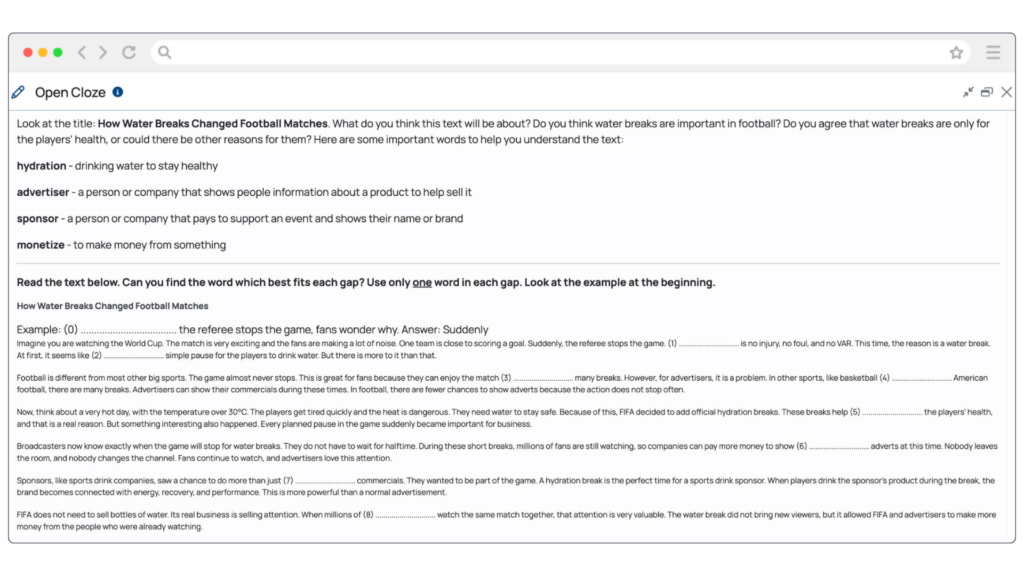
dseuling@avallain.com