Walking a fine line – Big data as an opportunity for educational technology

Even in our tech-savvy modern world, the term “big data” can divide opinions. To some, the term is synonymous with surveillance, to others it represents the unique opportunity to analyse and gain a thorough understanding of complex situations by means of technology. Within the educational sector in particular, big data can significantly improve the effectiveness of differentiated and individualised learning processes.

But how is it possible to observe the various ethical and legal restrictions of the international marketplace at the same time?

Information overload in the digital age

Detached from its moral and political connotations, the term “big data” simply describes sets of data which can only be processed by technological means. In most cases, the information is in a state of constant flux or it is too unstructured to be successfully processed by the human brain. Often, the datasets are also simply too large.

Only a few decades ago, this would have been an insurmountable problem, leading to the loss of valuable information. But today, even particularly large and complex datasets can be collected and processed thanks to advanced digital systems. Now more than ever, software is being used to perform tasks that are simply too difficult for humans to perform at the same level. Notably, such tasks include:

  • Collecting vast datasets
  • Analysing and correlating individual pieces of information
  • Interpreting all available information

Processing information this way saves both time and resources – while yielding surprisingly precise results. One need only look at the institutions that already rely on such systems to realise just how useful big data processing can be.

The economic and social role of big data

Advertising companies were among the first to use computers to collect, analyse and process big data. This entails automatically correlating highly complex subjects such as personal thematic preferences as well as patterns of media consumption and purchasing behaviour. The resulting insights are then used to create advertising strategies designed to psychologically affect a target audience by catering to its specific communicative needs.

Today, even taxi companies rely on collecting and processing big data to optimise their workflow. And since the US election in late 2016, it has become obvious that big data is not only processed by big business, but by political and social entities as well. Big data has become an integral part of modern society, and it is a subject of much discussion in the educational sector as well.

Can the EdTech Industry take advantage of abundant information while avoiding the risks involved?

There are two major discussion points: complexity and the legality. Big data processing solutions are highly complex by nature, which is why there are ethical as well as legal considerations to be made. For example, many countries do not allow for large individual sets of learner data to be merged with each other for analysis, on grounds of privacy protection.

Of course, there are good reasons for extensive privacy protection legislature. For example, the ethical concerns over the complete surveillance of classrooms practised by some US start-ups are completely reasonable. However, prohibiting big data processing techniques such as merging learner data across municipal borders can cause the artificial intelligence behind the system to form conclusions based on insufficient information. Consequently, any resulting analysis of such a limited dataset would be distorted, negatively impacting the individual learning experience.

The Avallain solution – One comprehensive system, fully customisable

We at Avallain have been tackling the topic of “big data” for a very long time. How can the available big data be collected to improve individual learning experiences – while simultaneously observing ethical and legal restrictions, which may differ from country to country?

Does big data provide big advantages to e-learning?

One of the unique benefits of education technology is its ability to adjust to the needs and preferences of individual learners in order to support individualised and differentiated learning approaches even within heterogeneous groups. However, when developing our own system, we found that most contemporary tools are solely focused on collecting trivial information, such as counting click-through-rates via Google Analytics, collecting administrative statistics as well as individual test results and tracking the frequency in which learners use particular pieces of content. Using such tools, one may be able to calculate average scores, but it is impossible to easily determine which educational approach has most significantly supported a learner in their studies. Finding such information usually requires a lot of additional work on the part of educators.

Even simple tasks like merging large datasets across platforms and devices using xAPI has not yet become an established standard for these tools. Such a limited and unstructured approach to big data does not yield useful information; it only contributes to “data lakes“. This means that the software collects input and simply stores it without analysing or collating it. Because of limited resources, such information tends to only accumulate over time without ever being processed.

The Avallain system – Think big

Our software solution, first released in 2016, is the result of our observations. It was designed to process big data efficiently without crossing ethical boundaries. Our system is based on the very same philosophy that Avallain has been following for more than 10 years now. Combining the most advanced technologies with the maximum amount of user friendliness thanks to complete flexibility. Our system cannot only be adapted to the personal needs of individual users, but also to the ethical and legal restraints of any given country.

Our system combines an xAPI learning record store with additional event storage capabilities. Not only does this allow learner progress to be recorded, but it also allows any given event to be recorded, ranging from menu usage to voice recordings in interactive audio tasks. Such events are stored in a separate big data warehouse system and can be processed using any common business intelligence suite. We also focus on usability when retrieving information – the process is particularly quick and does not require any additional training. This allows for effective big data mining from the very first day of using our software, giving immediate answers to questions such as:

  • Which content is especially popular?
  • Which content is popular with which age group?
  • Which content may be too hard or too easy?
  • Which content yields the best learning results?
  • Which channels of communication are being used within the learning platform?

Both the event storage system as well as the business intelligence suite can be completely customised according to the customer’s requirements. Our big data analysis system is compatible with database systems ranging from open source software to professional cloud storage solutions. In addition, it can operate with any of the most common analysis tools such as Amazon Elastic Map Reduce. Thanks to the cross-industry approach of our architecture and the established standards which it is based on, we can quickly adjust to future developments and new methods of big data analysis as well. These can be integrated into the software at any time, while remaining cost-efficient.

Responsible use of big data supports individual paths to learning success

Avallain provides systems for efficiently using big data in digital education – which is done without crossing any ethical or legal boundaries. Our intelligent systems offer educators, institutions and corporations the ability to collect, analyse and interpret information in a very cost-effective manner.

We have recognised that by using big data consistently and responsibly, we can revolutionise individualised and differentiated learning approaches. To learners, this paints a particularly bright future, as their education will be more individualised, more interesting and more effective thanks to big data.


Hueber trusts in Avallain – Learning languages in the digital age

When the market leader in educational material for “German as a Foreign Language” / “German as a Second Language” enters into a partnership with Avallain, exciting times for language learners are guaranteed. The renowned publishing house Hueber will be using Avallain Author and Avallain Unity in the future; which means that they will build didactically and methodologically sound educational content on an innovative yet reliable technological foundation.

Almost 70 years of experience with 30 different languages

Hueber offers some of the most successful textbooks on the market, being an international pioneer in the field since 1955. Aside from their focus on German as a Foreign Language (GFL), they offer various products for learners and educators in more than 30 languages, ranging from textbooks to audiobooks as well as online courses.

Imparting comprehensive language skills

The name Hueber is synonymous with high-quality educational content, which employs the most recent didactic insights while creating a fun language learning atmosphere at the same time. However, to achieve both requires catering to learners’ abilities with customised content.

Interactive learning environments can be the answer to this challenge”, says Sylvia Tobias, chief sales and marketing director at Hueber. Avallain solutions meet her requirements completely: “Avallain Author allows us to create interactive learning content which adjusts itself to the abilities of the learner. Thus, we can support each learner individually, preventing the frustration of perceived setbacks.”

Ignatz Heinz agrees wholeheartedly, based on his own experience as co-founder of Avallain:

Over the last 15 years, we have been working with renowned publishers such as Macmillan, Oxford, Cambridge and Pearson, successfully creating various solutions for English-based language training. Most recently, we built a unique digital learning environment for Spanish language learners with Difusiòn – in a matter of months. Unarguably, we are the leading partner for publishers when it comes to interactive language learning.” Looking forward to the new partnership, Heinz says: “We are especially thrilled to now support Hueber as well – after all, they have spent more than half a century establishing themselves as the international vanguard of GFL education.

Thanks to Avallain Author, future educational content created and published by Hueber will be entirely independent from technological change. Thus, Hueber’s e-Learning expertise will endure in the face of technological progress.

VERITAS and Avallain are shaping the future of education in Austria

When it comes to formal education, the Austrian government has a clear goal for the near future – more digital learning content in schools. VERITAS, Austria’s largest and most innovative educational publisher, is set to lead the way by providing interactive textbooks as well as content which supports the entire learning process with performance-based personalized feedback. With their internationally-renowned partner Avallain, VERITAS will turn the dream of adaptive learning within heterogeneous groups into a reality. Schools across Austria stand to benefit from this unique collaboration.

Turning experience into innovation

Starting as a small publishing house, VERITAS has had some 70 years to grow and expand. Today, it is hard to find an Austrian school that does not rely on VERITAS textbooks. The publishing house has managed to achieve this status by conforming to the highest standards of quality and by always keeping up with the latest innovations in education theory and technology. It is no wonder, then, that among the large number of potential partners, they have decided to work hand in hand with Avallain to create groundbreaking digital education solutions.

A strong partnership, ready to make a difference

We are particularly impressed with the great versatility of Avallain Author and Avallain Unity”, says VERITAS Managing Director Manfred Meraner.

“Thanks to its highly modular design, we can fully adapt Avallain Unity to our specific requirements. But most importantly, it allows us to cater to the changing needs of each individual learner. At the same time, we can use Avallain Author to create educational content that is independent from any potential changes in technology, thanks to its object-oriented approach. This makes it easy to quickly react to technological innovations and to deliver high-quality educational content to schools.

VERITAS and Avallain are already working on their first big project, an extensive e-learning suite for interactive textbooks that will be able to react to local requirements quickly and with a great amount of precision. Avallain has already established its expertise by working with leading institutions such as Oxford University Press, Westermann and Pearson on similar projects. This great wealth of experience now stands to benefit VERITAS – and the Austrian educational system.

Working with VERITAS is a real opportunity for us to update the educational material available in Austrian schools for the requirements of the 21st century”, says Ignatz Heinz, Managing Director and co-founder of Avallain. “VERITAS has made a name for itself by being a great innovator in the field of education, and that is a perfect match for Avallain. Together, we can use the most advanced digital technologies to provide learners all across Austria with the exact educational content that they are looking for – the kind that is both fun and effective.

Huss Media and Directa Publishing House launch the future of vocational training with Avallain

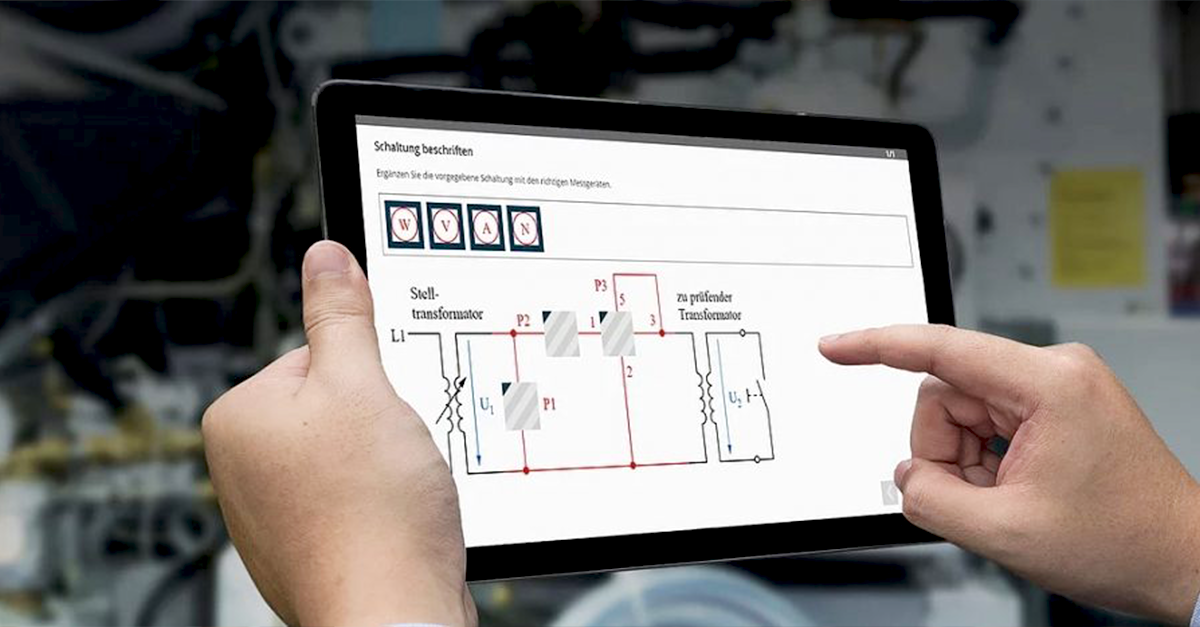
There is an abundance of specialist journals, textbooks and magazines for trade and industry, their main focus varies and the range is growing steadily. However, the interactive digital content that print publications now offer their readers is brand new: Since September 2016, deduu (digital education utility) – a learning platform with interactive learning modules for various disciplines such as electrical engineering or metal technology – is complementing the specialist magazines published by Huss Media and Directa.

This way Huss Media and Directa Publishing enhance their focus on traditional vocational print magazines and textbooks for the commercial sector, with future-oriented and innovative ways of delivering learning.

Torsten Ernst, Publishing Director of Huss Media GmbH, says:

“With the launch of our deduu project, we managed to bridge the gap between our print content and the digital world. From a publisher’s perspective, this is the missing link all publishers are searching for to enhance their traditional media products with a digital element.”

From the outset, deduu presents itself as a scalable learning platform, aimed at the needs as well as target groups of various customers. Not only does it thereby open a new market sector, but also expands the publisher’s magazine division with innovative offers, thus generating a younger audience. There are, for example, numerous products that enrich the vocational section of various magazines with interactive exercises. Vocational students can thus strengthen their knowledge or prepare for their exams.

From expert to interactive author – Avallain Author as facilitator

The platform technology is based on Moodle, which as an open source learning management system has a large community. The interactive content is developed with Avallain Author, an authoring tool that does not require any programming skills or prolonged training. Avallain Author provides an export of the produced content into the Moodle LMS. In cooperation with EDU-Werkstatt GmbH1, which is part of the d-education GmbH (a consortium of Directa, Huss Media and EDU), Avallain trained numerous authors from various disciplines to enable them to create a new range of digital products. Avallain Author turns print media specialists into authors of interactive learning materials.

Nico Warncke, publishing director of Directa Publishing, underlines the importance of this cooperation:

The advantage for specialist publishers is obvious: In addition to traditional articles in print media, we can now use the knowledge and expertise of our authors for interactive content, since Avallain Author requires minimal training and hardly any existing computer skills. Furthermore, deduu enables us to generate a more versatile publishing range that is better geared towards today’s needs. This allows us to access new markets and more importantly, win new young readers.

In addition to the monthly magazine, readers have access to the electronic learning modules via “my.deduu.de” and can therefore benefit from significant added value:

  • Readers receive feedback on their personal knowledge
  • In addition to the solution itself, the approach as well as background knowledge is explained
  • The product range is always up-to-date and grows over time
  • The user can try out different learning scenarios
  • There are tests to help with exam preparation
  • The product range is tailored to a target group that is mobile and lives and learns in a digital way
  • It can be used on all digital platforms (PC, tablets, smartphones)
  • Learning on the go using mobile devices is also supported

The move of specialist publishers towards digital education content

Going forward, the publishing range of deduu will be constantly expanded with new disciplines and areas of learning. This year will still see the launch of new products that help students prepare for exams.

Ignatz Heinz, Managing Director of Avallain, is pleased about the successful cooperation:

To make a contribution to vocational training programs and to accompany specialist publishers on their way to a digital education, is a great step towards new learning opportunities and pioneering vocational training developments. We look forward to see what customized interactive content will be built with Avallain Author next.

In January 2017, the new continuing learning opportunity “Modern metal technology” will be launched. It is aimed at vocational students and working professionals in all metalworking vocations and designed to help them prepare for their exams. This takes Avallain’s contribution in optimizing professional education materials and reaching a wider and younger audience one step further.

1 The EDU-Werkstatt GmbH is a young company that was established in 2012 and specializes in digital educational media; www.edu-werkstatt.de

Gamification with Avallain: points are really not the point

The concept of gamification may have been around since as early as the 6th century BCE – when military leaders in ancient China practised strategy with the game Go1 – but the term gamification itself wasn’t coined until 2003. Since that time, it has most often been used to refer to the process of applying game-based thinking and techniques to otherwise non-game situations, particularly in the fields of technology and edtech. Some consider applied gaming and gameful design to be synonyms of gamification.

The gamification process often results in serious games, which are not called serious because they lack fun. On the contrary, many serious games are great fun, but fun and entertainment are not their primary purpose. Instead, serious games aim to precipitate changes in learners in anything from skills and knowledge to health and wellbeing.2 In serious games, game techniques are applied to content to engage learners, and intrinsic motivation is elicited to spur sustained change.

What drives intrinsic motivation? Not points.

Intrinsic motivation is driven by “autonomy, mastery and purpose” (Pink, 2011): learners want to self-direct their learning; improve their knowledge and skills; and learn about and do meaningful things.3 Well-designed serious games allow learners to do all of those things, all without fear of failure or embarrassment. They also help avoid or decrease many of the time, cost, safety and organisational constraints often involved with learning and training.

There is some belief that simply adding a system of points or rewards to a product will gamify it, but we believe this is a trivialisation of gamification. Some experts refer to this process as “pointification” and don’t consider it gamification at all. Additionally, some research shows that incorporating only extrinsic motivators such as points can actually detract from learning and motivation.3 In order to develop intrinsically valuable gamified products, content must be gamified by mindfully incorporating game elements such as characters, stories, challenges and levels to predetermined learning objectives.4

Intrinsically motivating and award-winning: gamification at Avallain

Avallain Author and Avallain Unity give our clients the opportunity to gamify content by incorporating these and other game elements into their products. Pearson, for example, used Avallain Author to create rich interactive digital content including quests, games and songs for the language-learning adventure game, Poptropica English. Richmond, another of our clients, used Author to create Spiral, a virtual learning environment packed with interactive activities, games, cartoons and animated stories. And Oxford University Press has been using Avallain Author and Avallain Unity to create and support Oxford Owl, an award-winning learning management system that offers gamified educational content for both students and parents. All three of these serious game projects incorporate intrinsic motivators and engage learners with fun game-based activities.

We also collaborated with Deutscher Volkshochschulverband, the German Adult Education Association, to produce ich-will-lernen.de, a story-based, levelled game that teaches basic skills in German, English and maths. The content was gamified into a digital board game with levels that the learner must work through in order to help a character solve challenges. The addition of game elements to the educational content has proved highly successful in engaging learners, and the project has won multiple awards.

Putting game elements to work; playing to learn on the job

Gamifying since before the term gamification was coined, we’ve had experience adding game elements not just to educational content, but to hands-on job training content, as well. For instance, with Elsevier and Nestlé, we created scenario games, also known as story-based games, for teaching and training employees. For Elsevier, we created a scenario game that trains learners to administer ultrasound scans, and for Nestlé, we created a scenario game that allows workers to virtually tour and learn about factories and procedures. Both games elicit intrinsic motivation by giving employees the chance to self-direct, learn at their own pace, practise without fear and succeed in a virtual version of their workplace before having to actually perform tasks on the job. Additionally, game elements such as characters, stories and quizzes engage the learners and make the learning experience more accessible and enjoyable.

Gamification tools tailored to fit your educational design

Avallain Author and Avallain Unity support creativity and intrinsically motivated learning by offering authors much more than just a simple list of features like points, levels or time limits. With our tools, authors can add game elements to their content based on their own educational objectives instead of having to adapt their objectives to fit the tools. Our gamification technology is designed to be easy to use and customise, saving our clients time and money while still allowing their creativity to flourish. We tailor the technology to fit the concept, and not the other way round.

1 Deterding, Christoph Sebastian (2016). Make-Believe in Gameful and Playful Design. In: Digital Make-Believe. Human-Computer Interaction. Basel, Switzerland: Springer. pp 101-124http://eprints.whiterose.ac.uk/100127/1/Deterding_2016_Make_Believe_Gameful_Playful_Design.pdf

Halter, Ed. (June, 2006) From Sun Tzu to Xbox: War and Video Games. New York New York: PublicAffairs.

2 McCallum, Simon (2012). Gamification and Serious Games for Personalized Health.http://citeseerx.ist.psu.edu/viewdoc/download?doi=10.1.1.465.3239&rep=rep1&type=pdf (pg 86-87)

3 Pink, Daniel H. (2011) Drive: The Surprising Truth About What Motivates Us. Riverhead Books.

Wikipedia (2016). Drive: The Surprising Truth About What Motivates Us.https://en.wikipedia.org/wiki/Drive:_The_Surprising_Truth_About_What_Motivates_Us Accessed Oct-Nov 2016.

4 Kapp, Karl (2012). Future of Learning: Games and Gamification. Slideshare.http://www.slideshare.net/kkapp/future-of-learning-games-and-gamification Accessed Oct-Nov 2016.

Marczewski, Andrzej. (2012). Gamification and stuff. Slideshare.http://www.slideshare.net/daverage/gamification-and-stuff Accessed Oct-Nov 2016.

Kapp, Karl M. (2012). The Gamification of Learning and Instruction: Game-based Methods and Strategies for Training and Education. San Francisco, CA: Pfeiffer.

Walz, Steffen P. & Deterding, Sebastian (2015). The Gameful World: Approaches, Issues, Applications. Cambridge, MA: MIT Press.

Zac Fitz-Walter. A brief history of gamification. http://zefcan.com/2013/01/a-brief-history-of-gamification/Accessed 24 Oct. 2016.

Dichev, Christo; Dicheva, Darina; Angelova, Galia; Agre, Gennady (2014). From Gamification to Gameful Design and Gameful Experience in Learning. In: Cybernetics and Information Technologies, Vol. 14, No. 4. Sofia, Bulgaria: Bulgarian Academy of Sciences. pp 80-100 http://www.cit.iit.bas.bg/CIT_2014/v14-4/7-15-CIT2014-Dichev%20_1_-m-Gotovo.pdf

Sitzmann, Traci. A Meta-Analytic Examination of the Instructional Effectiveness of Computer-Based Simulation Games. University of Colorado Denver. In press at Personnel Psychology.http://www.ucdenver.edu/academics/colleges/business/about/Faculty-Research/workingPapers/test/Sitzmann_Traci_Simulation%20Games%20Meta-Analysis.pdf

Desktop publishing for the digital era: how to balance quality, cost and creative freedom

Almost three decades ago, technologies such as PageMaker by Aldus and Apple Computer’s LaserWriter printer heralded a revolution in desktop publishing. Adobe Systems offered seemingly unlimited typesetting and formatting solutions that were both creative and cost-effective. The days of the typewriter were gone, and a new era of desktop media was here to stay.

The potential appeared to be endless. But publishers soon realised that unfettered creativity comes at a cost.

Desktop publishing: creativity without limits?

Enthused by new options such as modern fonts and flexible page layouts, users began to experiment. In 1984, while working for Apple, Susan Kare introduced a bitmapped font that brought together many juxtaposed typefaces in the style of letters cut from many different newspapers or magazines, as in a ransom note. This “San Francisco” font became associated with unprofessional design, and the term “ransom note effect” was later coined to describe poortypesetting. It demonstrated how design and publishing freedoms do not necessarily lead to successful results, and that much of the promise of desktop publishing was, in truth, hype.

The industry now faced a new challenge: how to find the right balance between the freedoms offered by desktop publishing, and established best practice.

Mature desktop publishing: respecting roles, processes and standards

The problems, at least, were clear. Desktop publishing tools did not come with sufficient guidance, and neither did they allow content providers to lay down appropriate house styles, processes and constraints. These failings meant that quality was always at risk, and undermined those much-cited efficiencies.

The solution was to deploy the technology in a way that respected the roles people play, and the processes and standards to which they work. Soon desktop publishing offered authors and editors the full range of word processing tools, but not the tools to design. Designers benefitted from enhanced design features, but worked within prescribed styles and formats. Roles and standards were once again clear, but the process was much more flexible and efficient than anything that had come before.

Facing the next frontier: desktop publishing for a digital world

But as we know, this digital revolution reached far beyond the publishing industry. Very quickly it was not just the publishers’ processes that were digital – their products were too. And as publishers responded to market demands for interactive, responsive digital materials, desktop publishing faced a fresh challenge: how might it deliver these new media with all the efficiencies and creative freedoms that publishers had come to rely upon, while keeping control of quality?

Back to the present, and this new digital frontier is being conquered by an all-new publishing technology. The terminology has changed – now we talk about “authoring” tools instead of “desktop publishing” – but the promise is the same: to empower authors, editors and designers to create their own finished resources, without need of technical specialists.

But history is repeating itself, and unfortunately, so are the mistakes of the past. All too often, these solutions are so flexible that good editors are turned into bad programmers or designers. Other solutions are often so restrictive that content becomes bland and uniform, which is bad for both publishers and learners.

Avallain Author: the tools to excel – in every discipline

Avallain Author is different. Making the most of almost 20 years of close collaboration with publishers and institutions, we have devised a solution that truly delivers quality, cost efficiency and creative freedom. Its philosophy is simple: provide the tools necessary for each discipline to excel at their task. No more and no less.

Avallain Author offers a vast range of features for creating unique, innovative content. But not all of these features are relevant to every project, nor to every discipline. Our flexible architecture allows project owners to refine the options available, so that authors and editors can focus on creating excellent content, using the just interactions and features most suited to the learning and the product. In the same way designers are free to innovate within pre-selected styles and formats, which have already been set up in an overarching “Design Pack”.

The result is a publishing solution that offers the quality and efficiency expected of modern desktop publishing, while offering the creative freedoms necessary to deliver exciting and engaging digital learning.

Learning from the past, building for the future

With the lessons of the past in mind, we have built Avallain Author to adapt and evolve. As new features emerge to empower and engage learners, Author’s flexible architecture ensures that they are delivered without disruption. In this way, it has supported our clients through key technological developments, including:

  • the explosion of mobile devices;
  • the development of new standards such as Experience API; and
  • new content innovations such as Maze Readers, WIRIS math notation and gamification.

This flexibility also makes Avallain Author quick and easy to adapt for each client’s specific market demands, content and approach. That is how the platform has delivered so much so quickly, such as literacy to half a million adults in Germany, Kenya, Turkey and Ireland; secondary education to millions of students with OUP’s Kerboodle; primary numeracy in Germany with Westermann; and French and Spanish language learning with EMDL and Difusion.

Driven by the digital revolution, desktop publishing has come a very long way from its beginnings with PageMaker, LaserWriter and Adobe Systems. That revolution continues, and because of the creativity of the publishing industry, it still has a long way to go. We look forward to providing Avallain Author to support you and your publishing on that journey, and to deliver ever more enriching and rewarding resources for students and teachers.

A fusion of edtech and tradition: Avallain Technology showcased at the Frankfurt Book Fair

Traditional book fairs — and the education that drives them — are changing, and Avallain is proud to be part of the process. Almost a dozen companies with solutions powered by Avallain will attend the 68th Frankfurt Book Fair (FBF) this year.

A 17th century tradition, updated.

As the digital world grows, so does the number of educational technology conferences: Edtech and e-learning fairs are sprouting up all around the world in places from Hong Kong to Brazil.1 But the folks at these new tech fairs aren’t the only ones showcasing the latest in digital learning resources. Many traditional book fairs are getting in on the technological action, too.

The London Book Fair, for example, sponsors Tech Tuesdays throughout the year, and the Abu Dhabi International Book Fair offers an eZone for its participants. The Frankfurt Book Fair, one of the largest and oldest book fairs, and with a story more than 500 years old, now promises to grant access to “the full spectrum of digital trends and technological developments in the publishing industry.”2 With technologically focused “Hot Spots” in a centuries-old book fair, it’s clear that the traditional book fair has evolved.

By combining our strengths, we are experts together.

At Avallain, we aim to help our customers evolve in much the same way that the book fairs have evolved — by utilizing experience and existing didactic materials as a foundation from which to expand into the digital world. Some of our customers, such as Oxford University Press (OUP) and Cambridge University Press (CUP), have hundreds of years of experience and published didactic material to build upon. We combine those strengths with our strengths in education technology and digital publishing to help them excel digitally and offer unified cross media content to their users.

Our collaboration with Westermann, for instance, resulted in Denken und Rechnen(“Thinking and Numeracy”), a primary maths learning environment that supports differentiated learning by allowing teachers to respond to the needs of individuals. This resource was created based on Westermann’s existing textbooks and also includes enhanced, interactive versions of the books. It was delivered by Avallain Author and developed on the Avallain Unity platform, integrating the best in both print and digital to support teachers and students alike.

Avallain Author and Avallain Unity add a dynamic digital dimension.

Westermann will be exhibiting at the Frankfurt Book Fair, as will many of our other customers, including OUP, Difusión, Macmillan Education, CUP, Pearson Education, Cornelsen Verlag, Deutscher Volkshochschul-Verband (VHS) and Jouve, all of whom benefit from enhancing their portfolios with either or both Avallain Author and Avallain Unity.

OUP uses Avallain Author and Avallain Unity to power Kerboodle, the largest teaching and learning service supported by Unity, and Oxford Owl, a 2016 Bett Award winning website for primary schools. Difusión adds a digital dimension to their print repertoire by offering Avallain-powered Spanish teaching resources to their users. And Macmillan Education has combined more than 5,000 of their high quality resources3 with Avallain technology in order to bring Macmillan English Campus to English learners around the world. We are delighted to be part of our customers’ wonderful products, and to have our technology be showcased through some of them at the fair.

We wish our clients and partners great success at the Frankfurt Book Fair, and we look forward to meeting some of you there. We are excited at the prospect of having discussions about edtech and the latest digital publishing trends in the halls of one of the world’s oldest book fairs.

1 Edsurge. (2011-2016) Edtech Conferences You Need to Know. https://www.edsurge.com/news/2015-06-03-edtech-conferences-you-need-to-know Accessed 9 Oct. 2016.
2 Frankfurter Buchmesse. The Frankfurt Book Fair goes digital! http://www.buchmesse.de/en/Focus_on/more_topics/digitisation Accessed 9 Oct. 2016.
3 Macmillan English Campus. (2016) Platform Features. http://www.macmillanenglishcampus.com/benefits/platform-features Accessed 10 Oct. 2016

Avallain AG launches Avallain Foundation to unlock education for those who need it most

Quality basic education: an essential human right that nearly 61 million primary school aged children are left without each year.1 With current technological advances and such widespread internet access available around the world, why are so many learners being left behind?

At Avallain AG we asked ourselves that same question and after years of committing our time, resources and expertise to finding solutions, we are officially launching our contribution: Avallain Foundation.

Seeing people beyond profit margins

Avallain AG is a Swiss-based digital education company that has been solving digital education and publishing challenges worldwide since 2002. While serving millions of learners across five continents, we have regularly encountered places where quality education is unavailable and profitability too low to attract investment.

We recognised this deficiency early on and were determined to contribute to a solution. With the goal of unlocking education in mind, Avallain AG opened a daughter company in Nairobi, Kenya in 2009. Through this endeavour, we collaborated with target users and relevant local authorities over the course of seven years to develop locally-relevant educational products that can be accessed free of charge.

For example, iAFYA, a mobile app created in partnership with Google and Bupa, educates the public with easy-to-understand health tips regarding topics that range from healthy living to the early identification of symptoms of life-threatening diseases. iKilimo, also a mobile app, supports African smallholder farmers in their everyday tasks with tips on both land farming and livestock keeping. a-ACADEMY is an on and offline learning platform that takes primary school students and their teachers through a learning journey full of rich interactive activities aimed towards helping children succeed in their education. These products have been used by people who might not otherwise have had access to digital education. iAFYA alone has distributed more than 1.6 million health education tips across over 10 countries in Africa.

Ensuring the continuity of successful projects through Avallain Foundation

In the process of implementing different projects, we realised the successful ones had two important outcomes. First, they produced and delivered high-quality educational content via cutting-edge technology to people in great need of it, and second, they created job opportunities while also engaging teachers, governments and local authorities.These positive outcomes further fuelled Avallain AG’s determination and we decided to launch an independent organisation, Avallain Foundation, aimed at managing sustained and further educational outreach. Avallain AG donated the previously developed products to the Foundation to support it in its beginning stages, and together with our employees, founders and private donors, we contributed significant funds to enable the Foundation to continue to develop high-quality local content and support its distribution. To secure the Foundation’s continued stability and success, Avallain AG is committed to covering the administration costs, making sure that each donated dollar goes directly to those who need it most. Avallain Foundation is a fully established 501(c)(3) nonprofit organisation based in the United States with offices in New York and Nairobi, Kenya.

Unlocking education from the United States to Africa

Avallain Foundation works to improve learning and increase digital literacy hoping to bridge the digital divide and eradicate poverty. As Miriam Ruiz, Executive Director of the Foundation points out, “The existing new technologies should enable access to universal education, but that is not quite the reality today. Many stakeholders provide infrastructure and vast generic content collections, but there is a lack of locally-relevant content that is compatible with existing school systems and multiple environments. That gap must be filled with high-quality digital content.”To help fill that gap, the Foundation’s focus is on implementing projects in four main areas — child education, emergency education, literacy and education in the United States for those who have no easy access to the system such as ethnic minorities or immigrants. We want to reach and include those left behind and, as founder Ursula Suter says, “contribute with our best, to unlock education for those who need it most.”

If you want to learn more about Avallain Foundation and our projects, or if you’d like to get involved, please visit avallainfoundation.org.

1 United Nations Educational, Scientific and Cultural Organization. Education: Number of out-of-school children of primary school age. UNESCO Institute for Statistics, http://data.uis.unesco.org/. Accessed 26 Sept. 2016.

Taming the Hype Cycle: meeting spiralling expectations, controlling your costs

The pace of change in our industry is breathtaking. New learning technologies abound, bringing with them exciting possibility and commercial opportunity. But they also raise questions: which of them will prove themselves? Which are worth the time and investment it takes to make them part of what you do, and which will fail to live up to the hype? And in the meantime, how should you keep your strategic focus, and control your costs?

Understanding the Hype Cycle

In a field of bright ideas and shifting technologies, it can be impossible to tell the ones that count, from the ones that can’t. Even when a technology is destined for great things, expectations become overinflated, and our understanding of how best to make use of it is lacking. Only with time do we come to understand its true value and rightful place. The clever folk at Gartner have modeled this principle, and they call it the Hype Cycle.

Some technologies will fail somewhere along this path, reaching that Peak of Inflated Expectations but never quite making it to the Plateau of Productivity. But Gartner suggests that all significant technology makes this journey. The precise shape of the cycle might vary a little for each technology, but the passage through these five phases will be the same.

A year ago, for instance, Gartner placed the Experience API on its way up the Peak of Inflated Expectations; learning analytics at the peak; gamification entering the Trough of Disillusionment; and e-textbooks climbing the slope to productivity. The University of Minnesota has done more work on this, and has plotted all new educational technology on what they call the Hype Cycle for Education.

Reading the Hype Cycle, and choosing the time to invest

The point of all this is simple: it takes all technology time to prove itself, and even more time to mature. In the meantime, solutions providers, publishers and institutions have to decide whether and when to invest. Adopt early, and they risk wasting time and money. Adopt too late, and they miss an opportunity to stand out from the pack.

But it doesn’t need to be that way.

In our 20 years in educational technology, we have seen cycle after cycle. We have witnessed the empty hype of passing fads, and the impact of true, seismic disruptions. Throughout, our aim has been to shield our clients from cost and risk, and the fact that so many have stayed with us for more than a decade shows that we have the formula right. So what is our secret?

An holistic view of technology: platforms that evolve

At Avallain, we always have an eye on emerging technology, using our didactical and technical experience to sift out those that are more hype than substance. When we think one looks interesting, we approach it holistically, as part of our suite of technologies that deliver learning. We build the new capability into our existing architecture: Avallain Author for content innovations, Avallain Unity for learning management. And because we build flexibly, with an entirely object-oriented approach, such integrations are efficient: on average our customers have a first response to the new technology within just three months.

Once adopted, the new technology benefits from the stability of our mature platforms, and from the genuine learning context that they provide. Meanwhile our clients are able to experiment with the new capability early, and at a fraction of the cost of implementing it alone. Because they can simply switch the capability on, they are free to introduce it to their products without any of the risk of rollout, or move more slowly without the risk of being left behind.

Managing disruptive change into productivity

As the technology journeys to maturity, we are watching. Our review processes enable us to explore how the innovation contributes to learning, and our clients quickly benefit from our refinements and emerging best practice. But this work is never a distraction. We continue to work holistically, with the complete suite of learning innovations that make up our platforms, using each technology for what it does best. We don’t over-invest in one innovation, or present it as a panacea, and so we avoid expensive reversals down the line.

And when the new technology is down that line, at the Plateau of Productivity, we are not content just to maintain it. Like the platform as a whole, it receives regular enhancement, so that it continues to be responsive to changing demands, and to earn its place in the Avallain ecosystem.

In this way, Avallain makes full use of each phase of the Hype Cycle. No emergent technology passes us by, and instead of the hype ruling commercial decisions, it is absorbed and controlled. Fashionable technology is given its place, and key new educational technologies are managed into productivity.

And our clients? They know that the best of new technology is always in the pipeline, and that the disruptions of the future will never break the bank.

Learning without bounds? Our experience with the Experience API

Five years ago a revolution began in our industry. The SCORM standard became yesterday’s news, and something else stole the limelight: Experience API, otherwise known as TinCan API, or xAPI. It promised great things: a simple, flexible specification that connects the dots between a person’s or group’s learning experiences, wherever they happen, online or offline.

Avallain immediately saw the potential. We got involved early, and made it part of our own research and development. So what has been our experience of Experience API? Does it do what it says on the TinCan, or is it all technological hype?

What is Experience API?

Experience API is an open source specification established by Advanced Distributed Learning (ADL), the people who oversee SCORM. Effectively, it defines a common language between any environments in which a person or group might gather experience or learn. That includes less obvious ones like offline learning, social learning, virtual worlds and gaming. The specification is not bound by hardware, software or any kind of context. It takes up where SCORM left off, capturing our more modern experience of technology: one that is blended, mobile and complex.

Think, for example, of a teacher who wants to use a learning app to illustrate a point to their class. It is not part of the school LMS, but it is relevant and useful, and the learning outcomes provide a helpful measure of progress, too. With the Experience API at work, students should be able to use the app and have their achievements captured in the LMS. They could collaborate over it on a social platform, and have that interaction captured, too. Then, when the class next meets to discuss and interact about their experiences, the outcomes of that offline discussion can be added to the record. None of the learning is lost – not for the learner, nor for the teacher.

How does it work?

This is the elegant part. Experience API uses the same form of language that we have always used to describe and record our experiences:

actor + verb + object

Or to put it simply:

I        did        this

When you think about it, all of our actions and achievements can be distilled into a statement that takes this form:

actor      verb       object

she       visited          ?

he         scored          ?

Dave     viewed        ?

they      mastered    ?

This is the basis of Experience API: actions and achievements captured in very simple statements. When those statements need to be recorded, they are sent and held securely in a repository called a Learning Record Store (LRS). LRSs can be inside a Learning Management System or they can stand alone, but two things are common to them all: the language they use and the fact that they are able to communicate with other LRSs.

In these simple ways, Experience API promises to create a new, free and meaningful dialogue between the different places in which we learn. Nothing of our learning journey should be lost, and with modern analytics, there could be much to gain. This greater insight into the full spread of our learning experiences could tell us things like how and where we learn best, our weaknesses and how they are changing, our emerging interests, blind spots and aptitudes, as well as what content works best in which context.

So, what do we think of Experience API?

We have always seen the potential. We engaged early and developed our own LRS. We made sure that content generated in Avallain Author supports the standard. We know that Experience API is taking the industry in the right direction, towards the joined-up journey that learning should be.

But it is not a panacea. So far, we have a grammar for this new common language, but not the vocabulary. It will only work to full effect once we are all using standard actors, verbs and objects. Neither is compliance with the specification an end in itself, it is a beginning. Two systems may both be compliant, but that does not make their communication meaningful, or guarantee their combined performance. And if an LRS is always part of a larger, interconnected architecture, where should the overarching analysis of attainment and behaviours take place, and using what tools? In other words, most of the creative and technical challenges remain, even if the possibilities just got more interesting.

Diverse learning: the future beyond SCORM

Experience API offers us a way to leave behind some of the limitations of SCORM, and embrace a more diverse learning experience: one that is digital, mobile, recreational, social, offline, lifelong. That is as it should be, and we will do all we can to work with the specification, and to help it mature. But it must not become a distraction from the things that underpin a great digital learning experience: inspirational content, creative collaboration, robust pedagogy and exceptional design.

That is what Avallain is here for: to deliver for its clients these things that truly drive learning, and along the way, make best use of new technologies like Experience API.